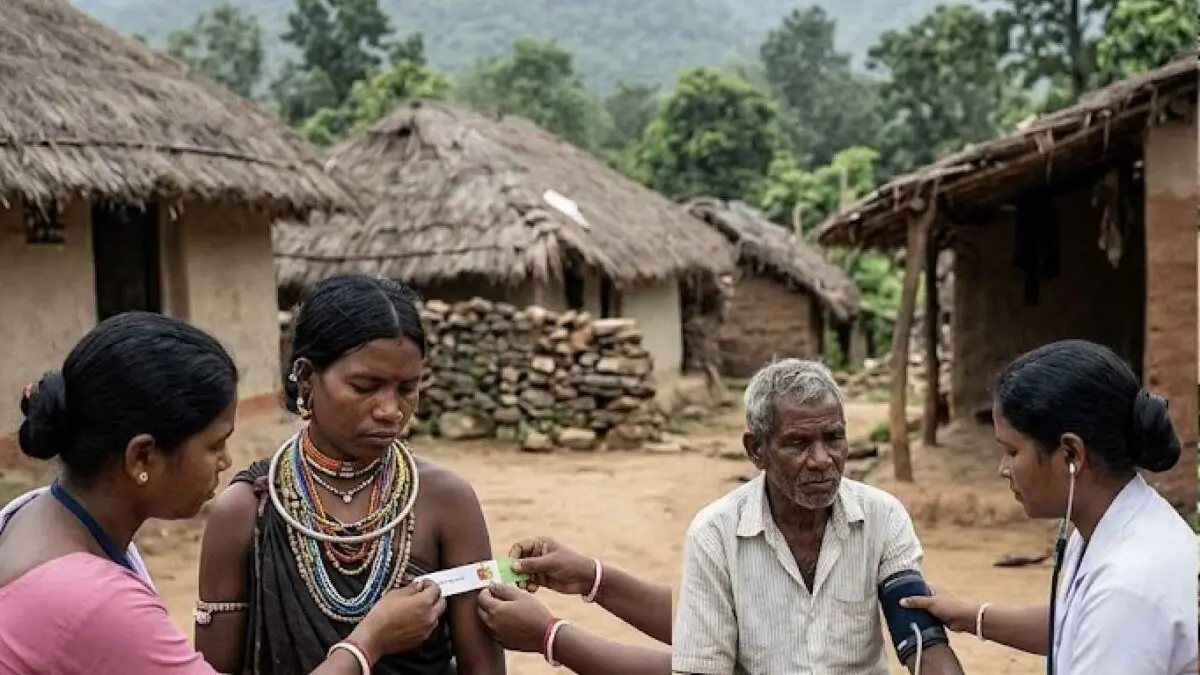
Bhubaneswar: A new study by Utkal University in Bhubaneswar paints a nuanced picture of health challenges facing Odisha’s Particularly Vulnerable Tribal Groups (PVTGs), highlighting persistent undernutrition alongside the early emergence of metabolic conditions such as hypertension, even as some development indicators show modest gains.
The comprehensive interdisciplinary survey, covering 9,222 individuals from over 2,000 households across 10 of the state’s 13 PVTGs including the Bonda, Didayi, Dongria Kandha, Kutia Kandha, Juang, Paudi Bhuiya, Hill Kharia, Mankidia, Lodha, and Lanjia Saora, underscores deep nutritional deficits rooted in limited dietary diversity, infections, and access barriers, while flagging lifestyle shifts that are introducing new vulnerabilities.
Released on July 20 by Governor Hari Babu Kambhampati, the report “Socio-Cultural, Demographic, Nutrition and Health Status of the Particularly Vulnerable Tribal Groups (PVTGs) of Odisha” reveals stark gender and community disparities. More than 53% of adult women and nearly 37% of adult men were found to be anaemic, with particularly alarming rates among Mankidia, Bonda, Lodha, and Lanjia Saora groups.
Adolescent health indicators are equally concerning. Over half of female adolescents (50.74%) show stunting—a marker of chronic undernutrition—with rates soaring to 82.76% among Hill Kharia girls. Acute undernutrition, measured by thinness, affects nearly 31% of male adolescents overall, rising sharply in communities like the Didayi and Lodha.
This historical burden of undernutrition is exacerbated by deep-seated gaps in essential maternal and reproductive care. Home deliveries still account for nearly 60% of births across these hamlets, reflecting persistent barriers to institutional healthcare. Menstrual hygiene infrastructure remains equally sparse: over 83% of PVTG women rely on cloth or traditional materials due to financial constraints and entrenched social norms, with only 18.94% using sanitary napkins. Furthermore, more than 22% of surveyed women clean reusable menstrual materials using water alone without soap, drastically increasing their vulnerability to reproductive tract infections.
Simultaneously, the study flags the quiet emergence of metabolic and cardiovascular risks that were once virtually absent in these forest-dwelling populations. Approximately one in seven adults now suffers from hypertension, affecting 15.15% of men and 14.38% of women overall. In specific groups, blood pressure levels have climbed sharply: 27.55% of Hill Kharia men and 24.81% of Lodha women were identified as hypertensive, alongside elevated rates among Lanjia Saora and Paudi Bhuiyan adults.
Authors Prasanna Kumar Patra, Mitali Chinara, Subhendu Kumar Acharya, Suresh Chandra Murmu, and Binoy Kumar Kuiti attributed this shift to changing dietary structures, reduced physical exertion, psychosocial stress, and potential underlying genetic predispositions as traditional lifestyles adapt to regional market linkages.
While the study highlights notable progress in basic outreach, including a 68% awareness rate for family planning alongside steady improvements in child immunisations and primary school attendance, experts caution that standard developmental interventions will fail if applied uniformly.
Utkal University Vice-Chancellor Chandi Prasad Nanda noted that the field-rooted findings provide policymakers with a clear baseline of both community resilience and acute vulnerability.
Reinforcing this view, ICMR–Regional Medical Research Centre scientist Acharya emphasised that given the vast socio-cultural variations among indigenous groups, a single, one-size-fits-all policy cannot work. Instead, public health authorities must roll out tribe-specific, culturally sensitive, and gender-focused programs—combining school-based nutrition, localised reproductive education, and early metabolic screening—to protect these vulnerable populations from being caught between old health disparities and new lifestyle diseases.