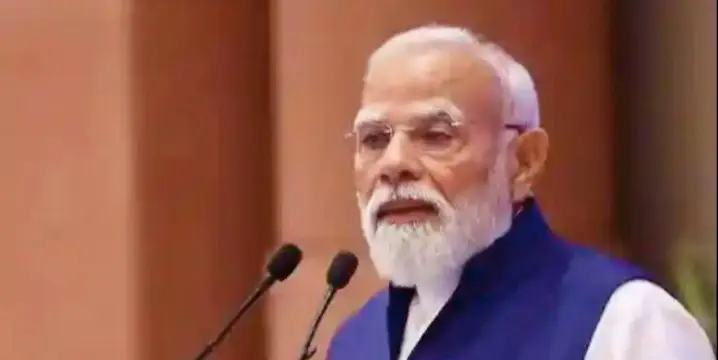
New Delhi: Seven years after the abrogation of Article 370 that gave Jammu and Kashmir special status, Prime Minister Narendra Modi described the move as a “decisive new chapter” in history.
The Union government, On August 5, 2019,tabled a bill to bifurcate the state into two Union territories and also read down Articles 370 and 35(A) that gave the erstwhile state special powers to determine issues of domicile.
“Seven years ago, on this day, Articles 370 and 35(A) became history, marking a decisive new chapter in the journey of Jammu and Kashmir as well as Ladakh,” the PM said in an X post on Wednesday.
“…Since then, the lives of the people of J&K and Ladakh have witnessed wide-ranging transformation. Infrastructure has expanded, opportunities in areas such as education, healthcare, entrepreneurship and sports have grown. Be it the women or the marginalised communities, those who were denied their basic constitutional rights for decades have been empowered thanks to the full application of the Constitution of India,” he said.
Jammu and Kashmir was carved out as a Union Territory with an Assembly and Ladakh was given the status of a UT without legislature, after the Bill was passed by Parliament.
The Union government reaffirms its commitment to the progress of Jammu and Kashmir as well as Ladakh and to ensure that every citizen has the opportunity to dream big, achieve and contribute to the making of a Viksit Bharat, the Prime Minister said.
“…5th August this year assumes even greater significance as this is the year our nation commemorates the 125th birth anniversary of Dr. Syama Prasad Mookerjee. His lifelong commitment to national unity continues to inspire generations. What he envisioned decades ago found historic fulfilment on 5th August 2019,” he said.
Jammu and Kashmir had special constitutional status under Article 370, allowing it to have its own Constitution and limiting the automatic application of central laws.
Article 35A empowered the state legislature to define permanent residents and grant them special rights, including in land ownership and government jobs. After the changes, all provisions of the Indian Constitution and central laws became applicable to Jammu and Kashmir like in the rest of the country.