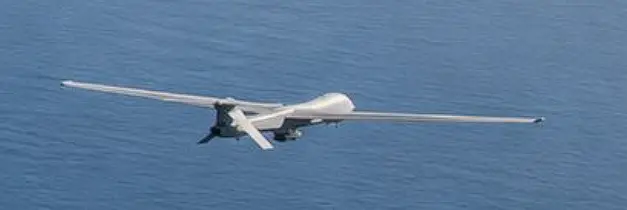
Kyiv: Ukraine’s expanding drone campaign is increasingly disrupting Russian airports and raising concerns over the safety of commercial flights, prompting President Volodymyr Zelenskyy to warn airlines and insurers that Russian airspace could become effectively unusable.
Zelenskyy said on Tuesday that Russia, which launched its full-scale invasion of Ukraine in February 2022, was now “closing its own skies”. He stressed that Kyiv was not threatening civilian aircraft, but said airlines and insurance companies could no longer ignore the growing number of drones operating over Russia.
“Today, we want to warn every airline that uses Russian airspace, every insurer and everyone who still uses Russia’s key airports: Russian airspace is becoming completely unsafe,” Zelenskyy said during his nightly address.
“Ukraine does not threaten civilian aviation as such – not a single civilian aircraft. There will simply be drones in Russia’s skies on a scale that has to be taken into account,” he added.
“Drone-infested skies are no place for civilian aviation,” Zelenskyy said on Tuesday. “The sky over Russia is currently for drones … as long as the war continues.”
“We in Ukraine do not want innocent lives to be lost. That is why we are warning our partners: The safe days in Russia’s skies are over,” he said.
Russian President Vladimir Putin denounced the remarks as “a declaration of state terrorism”.
Drone Ops Disrupt Russian Aviation
Ukraine’s drone industry has expanded rapidly during the war, enabling Kyiv to strike military, energy, industrial and transport targets deep inside Russia. The range of Ukrainian systems has reportedly increased from about 630km in 2022 to nearly 1,750km this year, with attacks reaching as far as Omsk, around 2,500km from Ukraine, as reported by Al Jazeera.
The drones have repeatedly affected civilian aviation. When they approach major cities, Russian authorities temporarily suspend take-offs and landings under emergency procedures until the threat has passed. Such restrictions have increasingly affected airports around Moscow and other urban centres.
“Ukraine has consistently launched more than 500 drones near daily, with multiple days exceeding 1,000 drones, according to figures released by the Russian [Ministry of Defence],” said Mark Brace, head of analysis at aviation risk advisory firm Osprey Flight Solutions.
“Essentially, Zelenskyy is articulating publicly what Ukraine has been doing for months: systematically disrupting Russian airspace,” he told Al Jazeera.
According to data from Osprey, an aviation-security and risk-intelligence company, Russian airports have experienced an average of 30 closures a day since the war began. The firm expects attacks deeper inside Russia, including near Moscow and St Petersburg, to continue through 2026. It warned that misidentification or miscalculation could pose a serious risk to aircraft.
The threat is not only theoretical. Putin said two Russian missiles detonated near an Azerbaijan Airlines aircraft in 2024 after Ukrainian drones entered Russian airspace. Thirty-eight people died in the incident.
Airlines Face Longer Routes, Higher Costs
Before the invasion, more than 360,000 flights annually crossed Siberia, making Russian airspace the shortest link between Europe and Northeast Asia. Many Western airlines now avoid the route, forcing flights to take two to four hours longer. The Helsinki-Tokyo journey, for instance, has increased from nine hours to 13.
“Russian airspace remains the single biggest structural distortion in global aviation,” said Middle East-based aviation analyst Alex Macheras.
The impact could be greater if airlines from China, Turkiye, the United Arab Emirates and other Gulf countries also lose access. Chinese carriers currently retain a time and cost advantage on Europe-Asia routes by flying over Russia, while Turkish Airlines has benefited from Istanbul’s position as a major connecting hub.
Air India also uses Russian airspace for some Delhi-London and Delhi-New York services. Gulf airlines may gain comparatively, as more traffic is redirected through Doha, Dubai and Abu Dhabi.
Alternative Corridors Crowded
The aviation sector is facing additional pressure from conflicts in the Middle East, restrictions on Indian carriers using Pakistani airspace and high fuel prices. Osprey said alternative routes through the Caucasus, Central Asia, the Red Sea and Gulf were already congested.
Azerbaijan’s daily flight movements rose from 278 before the invasion to 695 by the end of 2025. Traffic climbed to 810 flights a day in March after attacks involving the United States, Israel and Iran disrupted other corridors, with a peak of 1,062 flights recorded on May 9.
“The Caucasus corridor is barely 100 miles [161km] wide at its narrowest point, and it’s already handling detoured traffic from both the Russian closure and, more recently, Middle East disruptions tied to regional conflict,” Macheras said.
“Any further Russian airspace restriction would push still more volume onto a corridor that is already near saturation, driving fares and journey times higher across the board,” he added.