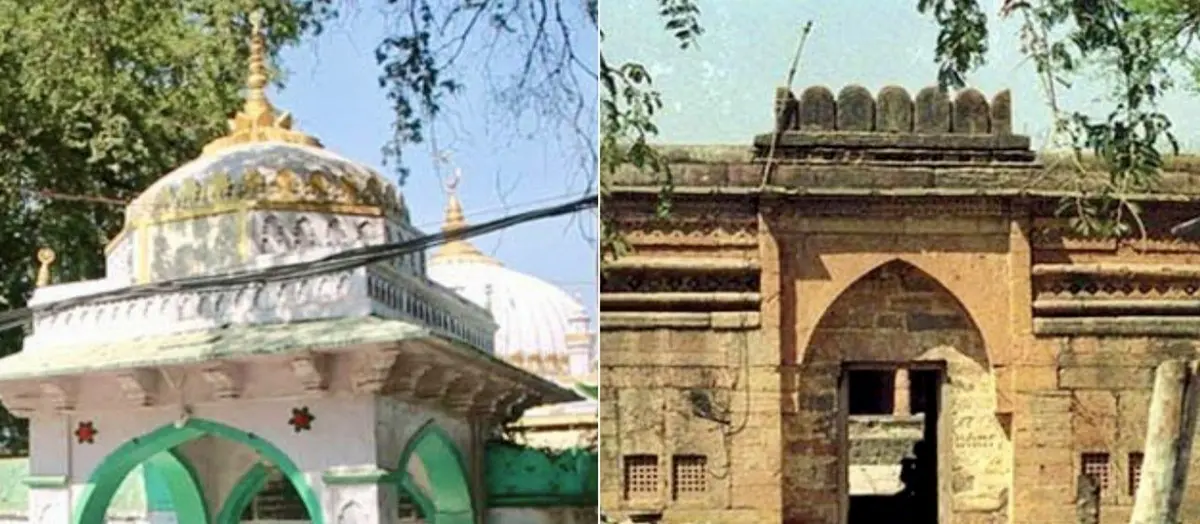
New Delhi: The Supreme Court declined to stay the Madhya Pradesh High Court’s order in the Dhar Bhojshala dispute but permitted the Muslim side to offer Friday namaz at an open space near the complex.
The bench of Chief Justice of India Surya Kant issued notice on petitions filed by the Muslim side and directed that the Archaeological Survey of India (ASI) shall not make any structural changes to the disputed monument until further orders. The matter will be heard after three weeks, the Court said.
The Court was hearing petitions challenging the Madhya Pradesh High Court’s order in the Dhar Bhojshala dispute. Appearing for the Muslim s
ide, senior advocate Huzaifa Ahmadi argued that the High Court had altered the existing arrangement by completely excluding the Muslim community from carrying out religious activities at the complex site, as reported by abp LIVE.
“The High Court changed the earlier arrangement. We have been completely excluded from carrying out religious activities. We were not even given an opportunity to approach the Supreme Court,” he said.
Appearing for the petitioners, senior advocate Abhishek Manu Singhvi, cautioned against reopening historical disputes. He further argued that namaz had been offered at the site for nearly 700 years and referred to British-era records to support the claim.
“An eye for an eye will make the whole world blind. There may have been a temple there. Similar claims are made about the Qutub Minar. Claims are also made about the Taj Mahal…Namaz was offered at the Dhar Bhojshala for 700 years. Even records from the British era establish this,” Singhvi said.
The earlier arrangement, under which namaz and Hindu worship coexisted, reflected communal harmony, Singhvi said.
“Offering namaz alongside Hindu prayers on Basant Panchami and Tuesdays was a good example of religious harmony. That arrangement should not have been disturbed,” he submitted.