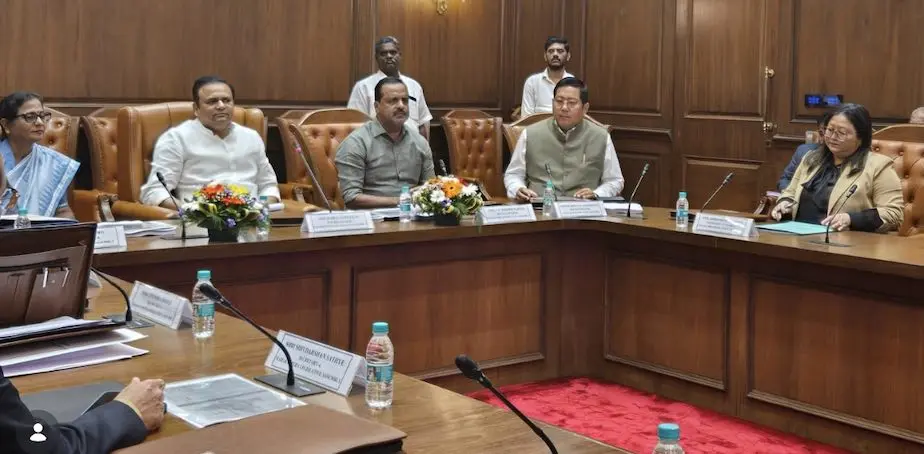
Bengaluru: A high-level committee of Legislative Assembly Speakers from five states, formed by Lok Sabha Speaker Om Birla to review and strengthen the Anti-Defection Law enshrined in the Tenth Schedule of the Constitution, is set to hold its second meeting in Bhubaneswar on April 22 and 23.
The committee, chaired by Maharashtra Assembly Speaker Rahul Narwekar, includes Speakers from Odisha (Surama Padhy), Sikkim, Nagaland (Sharingain Longkumer), and Karnataka (U T Khader). It was constituted by the Lok Sabha Speaker and Chairman of the All India Presiding Officers Conference earlier this year with a mandate to examine the constitutional, statutory and procedural framework governing disqualification of members on grounds of defection and the challenges faced in discharging these functions.
The first meeting of the panel took place at Vidhan Bhavan in Mumbai on February 9 and 10 where members discussed legal aspects, judicial guidance, and potential reforms to the framework governing disqualification on grounds of defection. The Bhubaneswar sitting will continue these deliberations, with the committee expected to submit its recommendations to the Lok Sabha Speaker within one year.
The Anti-Defection Law, introduced via the 52nd Constitutional Amendment in 1985, aims to prevent legislators from switching parties for personal gain, such as ministerial berths or other inducements. It disqualifies members who voluntarily give up party membership or defy party whips. However, critics and expert bodies like the Dinesh Goswami Committee, Law Commission reports, and the National Commission to Review the Working of the Constitution have long called for reforms, including time-bound decisions, greater transparency, and potentially shifting adjudication from Speakers to independent tribunals or the Election Commission to address perceived biases and delays.
Recent cases across states, including cross-voting incidents in Odisha during Rajya Sabha polls and prolonged disqualification petitions in Telangana and Maharashtra, have underscored the need for strengthening the law while balancing democratic freedoms.
The Supreme Court has also repeatedly urged expeditious decisions by Speakers, warning of judicial intervention in cases of inordinate delays.