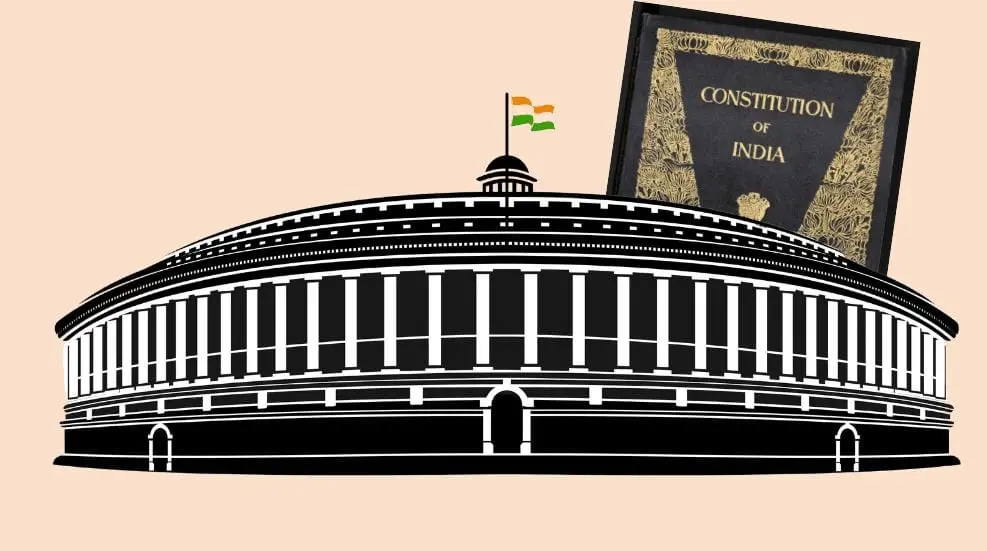
Fifty-one years ago, on June 25, 1975, a formal Presidential proclamation plunged India into an overnight dictatorship. Opposition leaders were jailed, the judiciary was bypassed, and press censorship was explicitly imposed. It was a visible, confrontational fracture in the nation’s democratic journey.
Today, as observers look at the contemporary political landscape, a pressing question arises for every citizen to ponder: Does an authoritarian shift require a formal declaration, or can the spirit of a republic be systematically altered while keeping its legal structures intact?
When we look globally, modern political history shows that democracies rarely collapse through sudden military coups or overt emergency decrees anymore. Instead, they undergo what political scientists call ‘democratic backsliding’ — a gradual process where the letter of the law is used to hollow out its substance.
In Hungary, Prime Minister Viktor Orbán famously built an ‘illiberal democracy’ not by suspending the constitution, but by rewriting it through legislative supermajorities and packing the courts with loyalists.
In Turkey, Recep Tayyip Erdoğan utilised economic regulators, tax audits and the strategic restructuring of higher education to neutralise opposition, eventually engineering a transition to a hyper-centralised executive presidency. Even in Russia, the early stages of consolidation relied heavily on the corporate buyout of independent media houses by state-aligned entities.
Are we seeing the early structural footprints of these international blueprints in contemporary India? The parallel with 1975 lies not in the methods, but in the ultimate concentration of authority. Today, instead of direct coercion, the subversion appears deeply institutional and long term. The selection processes for piv
otal bodies like the Election Commission and senior judicial benches have been subtly realigned to allow greater executive dominance.
Similarly, premier federal financial and investigative arms are increasingly seen operating with a selective focus, initiating complex regulatory inquiries that effectively tie up opposition leaders and regional parties in endless legal manoeuvres right before major electoral cycles.
This shifting landscape extends deeply into the social and economic choices available to ordinary citizens. The gradual erasure of alternatives — manifested in mandatory identity documentation for basic welfare, heavy toll networks, and regulatory pressures on small-scale, neighbourhood commercial spaces — subtly reorders public life.
Just as Turkey consolidated state contracts within a tight circle of loyal conglomerates, the domestic landscape increasingly favours massive corporate monopolies over the traditional, informal economy of small traders. This economic centralisation is mirrored in academia. The widespread appointment of ideologically aligned leadership across major universities — akin to the institutional purges seen in Turkey — raises a vital question about whether centres of learning are being transitioned from spaces of critical thought into factories of ideological conformity.
Furthermore, the federal balance faces structural strains reminiscent of the centralisation of the 1970s. The frequent fracturing of powerful regional opposition parties through political defections, alongside long-term legislative projections like the proposed delimitation exercise, creates a visible anxiety. If parliamentary weight permanently tilts toward specific geographic heartlands, will regional sovereignty be structurally diluted? Could this pave the way for a radical constitutional redesign that permanently elevates a decree-led executive presidency?
Over five decades after the dark broadcast of 1975, India is not experiencing a sudden, explicit coup. Instead, the nation faces a quieter, legalistic mutation. As independent checks weaken and choices narrow, the fundamental question remains for the public to reflect upon: If the guardrails of the Constitution are dismantled through the law itself, how will we recognise the point where a democracy transitions into something else entirely?
(Views expressed by the columnist are personal and do not necessarily reflect the opinion or policy of the news portal)