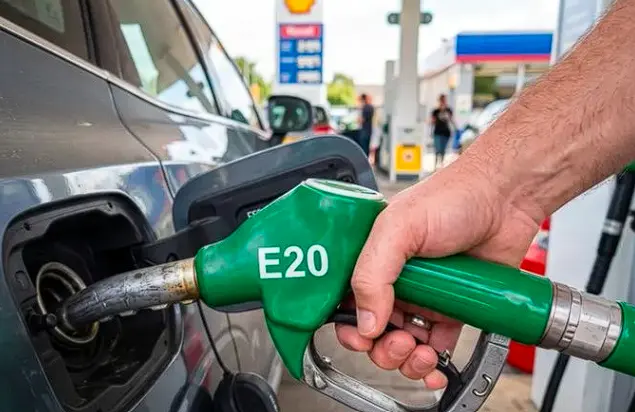
New Delhi: A LocalCircles survey of petrol vehicle owners has exposed broad dissatisfaction with the government’s E20 petrol rollout, particularly among drivers of older cars that were not engineered for higher ethanol blends.
The poll, which canvassed 22,567 petrol vehicle owners across 316 districts, found that 53% rated the handling of the E20 introduction by the Road Transport and Petroleum ministries as either “disastrous” or “ineffective.” Within that group, 42% described the rollout as “disastrous,” while just 13% offered a positive assessment, as reported by India Today.
Fuel Economy & Repair Worries
The survey flagged notable declines in fuel efficiency and rising maintenance problems. Among owners of petrol cars made before 2023, 66% reported their vehicles now deliver over 10% lower mileage after E20 was introduced. Additionally, 45% said they had seen a moderate to significant rise in wear and tear or repair needs.
Rising Demand For Lower-Ethanol Options
The findings also show growing interest in fuel choice: nearly 31% of pre-2023 petrol vehicle owners said they would prefer the option to purchase E0 or E10 petrol, even if it were priced above E20.
Government Defends Ethanol Policy
The survey’s release comes as the Centre continues to defend its ethanol blending programme. Official
s argue ethanol blending reduces India’s reliance on imported crude, cuts emissions, strengthens energy security and boosts farmers’ incomes.
Technical Standards & Legal Timeline
From April 1, 2026, all E20 petrol sold in India must meet a minimum Research Octane Number (RON) of 95. The Bureau of Indian Standards has also issued fuel specifications for E22 to E30 blends, though the government’s current plan remains centred on E20. In July 2026, the Centre told the Supreme Court that “the long-term impact of ethanol blending would become clearer by 2027” while contesting legal challenges to the policy.
Older Cars At The Centre Of Dispute
A key issue raised by the survey is that many vehicles on Indian roads were built for lower ethanol contents. Cars made before April 2023 were primarily designed with E10 in mind, while vehicles manufactured from April 2025 onward are deemed fully E20-compatible, the survey noted. That gap, according to respondents, has left many owners coping with poorer fuel economy and higher maintenance bills.
Calls For Parallel Availability Grow
The survey suggests that many motorists are not opposed to ethanol blending itself, but want more choice at the fuel pump. Nearly one in three owners of older cars said they would be willing to pay extra for E0 or E10 petrol, indicating demand for lower-ethanol options alongside E20. The report also warned that upgrading older vehicles for E20 compatibility could require replacing ethanol-sensitive parts in the fuel system, adding to ownership costs.
Survey Details
LocalCircles said the survey collected responses from 22,567 petrol vehicle owners across 316 districts. Respondents were 69% men and 31% women; about 46% came from tier-1 districts, 32% from tier-2 districts and the remaining 22% from tier-3, tier-4, tier-5 and rural districts. LocalCircles added that all participants were registered and verified users of its platform.