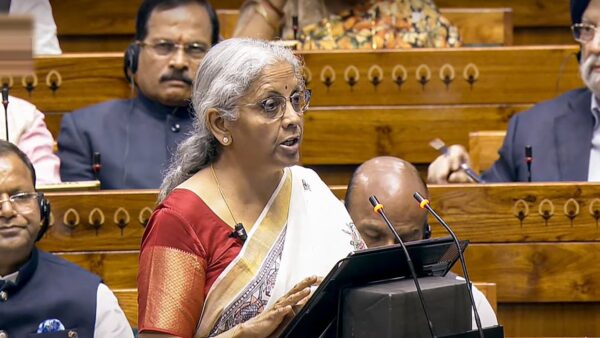
The Lok Sabha has passed the Income-Tax (No. 2) Bill, 2025 , which is going to replace the Income-tax Act of 1961. This new legislation will come into force from April 1, 2026 and it incorporates most of the recommendations made by a Parliamentary Select Committee headed by Kendrapada MP Baijayant Panda.
In fact, the government had to withdraw the earlier bill and introduce the new bill in its place to give effect to the recommendations of the select committee. The bill is part of a larger effort to simplify and modernise India’s direct tax system by eliminating age-old redundant regulations and making it more flexible and efficient for compliance. The fact that the bill was passed without much opposition and as a consensus proves that extensive deliberations were made at the Select Committee level and views of the stakeholders were taken into consideration to make it broad based and taxpayer friendly.
Salient features of the new Income Tax Act:
Simplification and Clarity: The new bill is designed to be more transparent and “taxpayer friendly.” It uses simplified language and a streamlined structure to make tax laws easier to understand and comply with. The number of sections has been reduced, and the text length has been cut by approximately half. The bill is built on what the government calls the “SIMPLE” principles: Streamlined, Integrated and Concise, Minimized Litigation, Practical and Transparent, Learn and Adapt, and Efficient.
Reduced Litigation: The new bill aims to reduce tax disputes by providing clearer definitions and removing ambiguities. It introduces a “trust first, scrutinise later” approach and includes provisions for a “Nil” tax deduction certificate for individuals with no tax liability, as well as a discretionary waiver of penalties for unintentional non-compliance.
House Property Income: The bill clarifies how income from house property is calculated. It removes the term “in normal course” and clarifies that the 30% standard deduction applies after deducting municipal taxes. It also extends the deduction for pre-construction interest on home loans to let-out properties. A significant change is the removal of the notional rent-based tax on unoccupied properties.
Pension and Other Deductions: The new bill explicitly allows for tax deductions on commuted pension for non-employees receiving pensions from certain funds. It also provides deductions for commuted pension and gratuity for family members.
Corporate and Business Taxation: The new legislation eases some restrictions on charitable trusts and removes the levy of Alternate Minimum Tax (AMT) on Limited Liability Partnerships (LLPs) in certain cases. It also relaxes provisions related to transfer pricing. The bill clarifies the definitions of “parent company” and “beneficial owner.”
Digital and Modern Administration: The bill retains provisions for faceless assessments and expands the scope of tax authority powers to include access to “virtual digital space” during search and seizure operations. The definition of undisclosed income is also expanded to include virtual digital assets.
Tax Filing and Refunds: The bill facilitates refunds for delayed Income Tax Return (ITR) submissions for small taxpayers and allows individuals to claim a refund of TDS even if the ITR is filed after the statutory due date.
It’s important to note that the bill maintains the existing tax slabs, capital gains rules, and income categories.
The new legislation is largely designed as a comprehensive replacement for the 1961 Act, with its basic focus on simplifying the tax code and reducing legal disputes. It is expected to enlarge the tax base through self compliance and boost the economy by increasing the tax collection in the coming days.