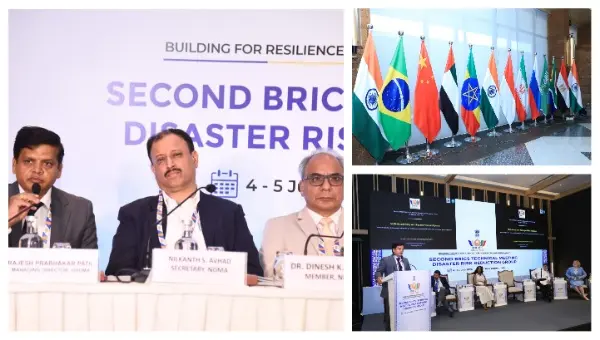
Puri: Odisha Police have put in place comprehensive and multi-layered security arrangements to ensure smooth conduct of the second BRICS Disaster Risk Reduction (DRR) Working Group Meeting, which began in the coastal town of Puri on Wednesday and will continue until June 5.
Under India’s BRICS 2026 Chairship, the National Disaster Management Authority (NDMA) is hosting the prestigious international event themed “Building for Resilience, Innovation, Cooperation and Sustainability.” Senior officials and technical experts from 11 BRICS member and partner countries — Brazil, China, Egypt, Ethiopia, India, Indonesia, Iran, Russia, Saudi Arabia, South Africa, and the United Arab Emirates — are participating.
Odisha was chosen as the host state in recognition of its globally acclaimed disaster preparedness, including a strong track record of zero-casualty cyclone management, effective early warning systems, evacuation planning, and community-based response mechanisms. As part of the programme, delegates will witness demonstrations by the Odisha State Disaster Response Force (ODRAF) on water rescue at Ramchandi, interact with community volunteers organised by the Odisha State Disaster Management Authority (OSDMA), and visit the UNESCO World Heritage Site at Konark.
On day one of the event, Special Relief Commissioner and Managing Director of the Odisha State Disaster Management Authority (OSDMA) Rajesh Prabhakar Patil presented Odisha’s robust early warning system, zero-casualty approach and successful disaster management model.
Foolproof Security Arrangements
Odisha DGP Y B Khurania, visited Puri on Tuesday and conducted a thorough on-ground review of all security aspects. He inspected the conference venue (Taj Puri Resort and associated facilities), accommodation sites for delegates, designated movement routes, and other critical locations. The DGP held detailed discussions with senior police officers and district administration officials, issuing specific directions for foolproof security, seamless coordination, and robu
st contingency preparedness.
A three-tier security framework has been established, with Odisha Police handling the primary layer, supported by the Special Security Group and central armed forces in outer layers. Ten platoons of armed police, backed by four Additional Superintendents of Police, six Deputy Superintendents of Police, eight Inspectors-in-Charge, 45 Sub-Inspectors, and a large contingent of personnel from district police, intelligence units, traffic police, marine police, special operations teams, and emergency response units, have been deployed.
Strategic Deployment and Surveillance
Security has been strategically layered with strict access controls, comprehensive anti-sabotage checks, regular area domination patrols, and continuous surveillance. CCTV monitoring, intelligence-based tracking, and technical surveillance ensure real-time situational awareness. All entry and exit points feature advanced screening, while designated routes for delegates and dignitaries undergo regular sanitisation and monitoring. Escort vehicles, Quick Reaction Teams (QRTs), and emergency response units are positioned at key points.
Given Puri’s coastal location, the Coastal Security Wing and Marine Police have intensified patrolling along the shoreline and vulnerable areas, with enhanced coordination with maritime agencies to counter any sea-route threats.
Traffic management plans aim to maintain smooth flow while minimising disruption to locals, pilgrims, and tourists.Odisha Police has strengthened collaboration with central intelligence agencies, district administration, fire services, health authorities, disaster response teams, and other stakeholders. Comprehensive emergency protocols — including medical aid, fire safety, and communication systems — are fully operational.
IGP (Central Range) Satyajit Naik emphasised that Odisha Police is fully committed to providing a safe, secure, and professionally managed environment for all participants. “Comprehensive planning, meticulous coordination, and adequate deployment of manpower and resources have been undertaken to ensure the successful and incident-free conduct of the meeting,” he stated.
The meeting is expected to foster greater BRICS cooperation on community-based DRR, financing mechanisms, multi-hazard early warning systems, resilient infrastructure, nature-based solutions, and the integration of science, technology, and innovation for disaster resilience. The inaugural session and key events will be attended by Odisha Chief Minister Mohan Charan Majhi, Revenue and Disaster Management Minister Suresh Pujari, NDMA officials, and representatives from the Ministries of Home Affairs and External Affairs.