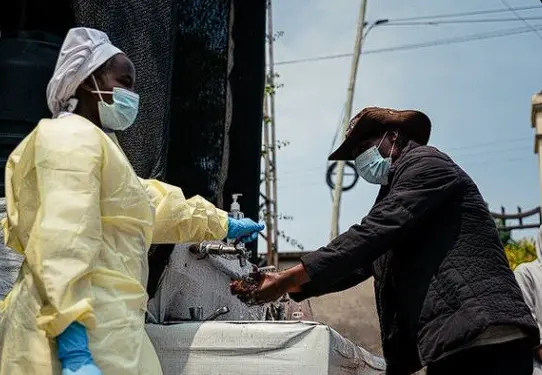
Geneva: The World Health Organization (WHO) warned on Tuesday about the “scale and speed” of a deadly Ebola outbreak in the Democratic Republic of Congo that authorities say has killed about 131 people and left hundreds more suspected of infection, AFP reported.
The WHO has declared the Ebola outbreak a health emergency and held an emergency meeting on Tuesday to help coordinate the response. The outbreak is caused by the Bundibugyo strain, for which there is no approved vaccine or specific treatment, and it is mainly affecting hard-to-reach areas where testing has been limited.
“We have recorded roughly 131 deaths in total and we have around 513 suspected cases,” Congolese Health Minister Samuel Roger Kamba said on national television early on Tuesday. “The deaths we are reporting are all the deaths we have identified in the community, without necessarily saying that they are all linked to Ebola,” he added.
Context & Spread
The outbreak was declared late last week in the country’s east. Earlier tallies put the toll at 91 dead out of 350 suspected cases, but officials say those figures have since risen as surveillance teams gather more reports from remote communities.
“I’m deeply concerned about the scale and speed of the epidemic,” WHO chief Tedros Adhanom Ghebreyesus told the World Health Assembly in Geneva, explaining why the agency raised its alert to the second-highest level under international health regulations. Tedros said 30 cases had been laboratory-confirmed in Ituri province, the epicentre.
Cross-Border Movements & Conflict
The epicentre is in northeastern Ituri province, bordering Uganda and South Sudan, a region where gold-mining activity draws frequent movement and where years of clashes between local militias complicate response efforts. Authorities say the virus has already spread into neighbouring provinces and beyond the DRC’s borders.
“Unfortunately, the alert was slow to circulate within the community, because people thought it was a mystical illness, and so, as a result, the sick were not taken to the hospital,” Kamba said, describing delays in care-seeking that have hampered early detection.
Cases Outside Epicentre
Suspected infections have been reported in Butembo, the commercial hub of neighbouring North Kivu province about 200 kms away, Kamba said, without providing further details. Another case has been recorded in the provincial capital of Goma, which is under the control of the Rwanda-backed M23 armed group.
Regional & Global Response
The Africa Centres for Disease Control and Prevention (Africa CDC) has declared the outbreak a continental public health emergency, which will help mobilize additional resources, including emergency teams and stronger surveillance. The WHO is helping coordinate international support, while national authorities are leading the response on the ground.
“Uganda has also informed WHO of two confirmed cases in the capital of Kampala, including one death among two individuals who travelled from DRC,” Tedros told delegates at the health assembly, underlining cross-border transmission.
A US citizen has tested positive for the virus after exposure linked to work in the DRC, the US Centers for Disease Control and Prevention said. The German health ministry said the patient is expected to arrive in Germany for treatment.
Precautions & Evacuations
The United States has increased precautions by screening passengers arriving from affected areas and temporarily suspending visa services. The CDC also said it is trying to evacuate six more people for health monitoring.
First identified in 1976 and thought to originate in bats, Ebola is a severe viral haemorrhagic fever transmitted through direct contact with bodily fluids. It can cause extensive bleeding and organ failure. The DRC has faced 17 outbreaks to date; the deadliest, between 2018 and 2020, killed nearly 2,300 people out of approximately 3,500 cases. The WHO said the previous outbreak before the current one killed 45 people between September and December last year.