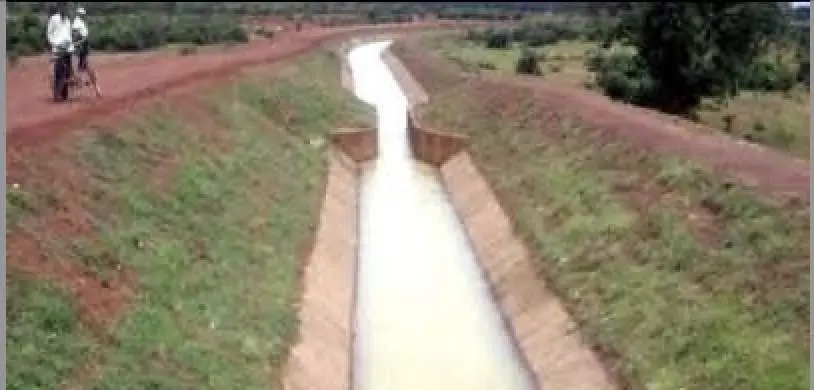
When I was a school-going boy, I came across a news item in a vernacular daily that used to reach our village by post, a day after its publication. The report was about the proposed Rengali Irrigation Project. It carried a list of villages that were expected to be covered by the Left Canal on its way. To my immense excitement, I found the name of our village among them, printed in black and white.
For a young boy growing up in an agrarian village, it was a moment of great excitement. I imagined a canal flowing through our area, bringing water to the parched agricultural fields and prosperity to the farming community. I even dreamt of swimming in its flowing waters with my friends on a bright, sunny afternoon. The canal was not merely an irrigation facility in my imagination; it was a symbol of hope and a promise of a better future.
More than fifty years have passed since that day. I have grown older, but the canal has still not reached our village. The agricultural fields continue to depend on the vagaries of the monsoon. Drought is a recurring phenomenon, often leaving farmers helpless and their investments in agriculture unrewarded. It is distressing that even after decades of development planning and more than seven decades of Independence, dependable irrigation remains an unfulfilled aspiration in our area.
The story of the Rengali Irrigation Project makes this delay particularly painful. Although the main project was commissioned decades ago in 1985 over the Brahmani river with World Bank assistance, the second phase involving the Left Canal system was taken up only in 2017. The project envisaged providing irrigation to 2,18,392 hectares of agricultural land spread across Anugulo, Dhenkanal, Jajpur and Kendujhar districts. It was expected to transform the agricultural landscape of these districts and provide relief to thousands of farming families.
In 2018, land acquisition for the project was undertaken in Jajpur district. However, the project is yet to be completed. Farmers who surrendered their valuable agricultural land in anticipation of the promised irrigation facility continue to wait for the project to become operational. They have lost a part of their livelihood without receiving the benefits that were supposed to compensate for that loss. Such a situation raises serious questions about the planning, execution and monitoring of public infrastructure projects.
Unfortunately, this is not an isolated instance. Across the country, we often come across ambitious development projects announced with much fanfare, followed by prolonged delays in implementation. Detailed project reports are prepared, administrative approvals are obtained, funds are allocated and foundation stones are laid. But the final delivery of benefits to the people remains uncertain. In the process, costs escalate, deadlines are repeatedly extended and the intended beneficiaries are left waiting.
An irrigation project has a special significance in a predominantly agrarian economy like Odisha. Assured irrigation can increase agricultural productivity, encourage crop diversification, reduce dependence on rainfall and improve rural incomes. It can also check distress migration and strengthen the economic foundations of rural communities. For farmers, water is not merely an infrastructure facility; it is the difference between prosperity and distress.
The failure to complete such a project within a reasonable time frame is therefore not simply an administrative lapse. It has serious economic and social consequences. Every year of delay means another agricultural season lost, another crop exposed to drought and another generation of farmers deprived of the opportunity to improve their living conditions.
There is also a larger question of accountability. When land is acquired from farmers in the name of public development, the government assumes a moral and administrative obligation to complete the project within a reasonable period. Land acquisition cannot become an end in itself. The purpose for which land is acquired must be fulfilled. Otherwise, the very rationale of compulsory acquisition becomes questionable.
The government must undertake a comprehensive review of the progress of the Left Canal system, identify the bottlenecks responsible for the delay and establish a time-bound programme for its completion. The farmers whose land has already been acquired deserve particular attention. Their sacrifices should not be allowed to go in vain.
I still vividly remember that day in my childhood when I saw the name of our village in the vernacular daily. The excitement of discovering that our little village would be connected to a major irrigation project remains fresh in my memory. I had imagined swimming in the canal waters with my friends, little realising that the canal would remain an elusive dream even after half a century.
Many of my childhood dreams have disappeared with the passage of time. But this one is different. It was not merely a personal dream; it was a collective aspiration shared by generations of farmers and villagers.
Today, I do not know whether I will ever see the canal flowing through our village. Perhaps another generation will continue to wait. But development cannot be allowed to remain a promise indefinitely.
A canal that exists only in project reports and government records cannot irrigate fields. And a promise that takes half a century to fulfil is hardly a promise at all.
That is why I say, with a deep sense of personal loss and public disappointment, that a dream has died young.
(Views expressed by the columnist are personal and do not necessarily reflect the opinion or policy of the news portal)