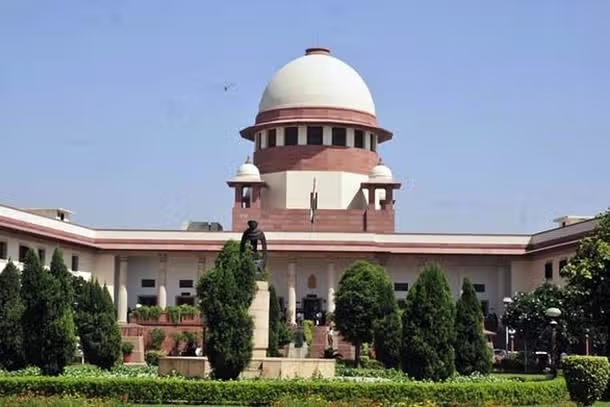
New Delhi: In a landmark judgment, the Supreme Court on Thursday recognized homemakers as “nation builders” and ruled that the loss of domestic care services provided by them should be treated as a separate compensation in vehicle related accident claims. The court also fixed a notional value of Rs 30,000 per month for such domestic and caregiving services.
The ruling marks a significant step toward acknowledging the economic value of unpaid household work, which has traditionally gone uncompensated despite its critical role in supporting families and society.
According to the Supreme Court, homemakers contribute substantially to the well-being of households and the nation through their unpaid labour. The bench observed that
a homemaker “builds the nation” through caregiving and household management, underscoring the importance of recognizing these contributions in legal compensation frameworks. The court described homemakers as “nation builders” while emphasizing that their services deserve independent consideration in compensation awards, reported Times of India.
The court held that the loss of domestic care and caregiving services should not be merged with other compensation categories but should be assessed separately. To provide a benchmark for tribunals and courts, it fixed a notional monthly value of Rs 30,000 for such works.
The judgment builds on a series of Supreme Court decisions that have sought to recognize the economic worth of homemakers. In a 2024 ruling, SC had observed that “the role of a homemaker is as important as that of a family member whose income is tangible,” while noting that the contribution of homemakers is “of a high order and invaluable,” according to court records cited by legal and media reports.
The apex court has repeatedly stressed that unpaid domestic work should not be undervalued only because it does not generate a formal salary. Earlier judgments have also emphasized that the contribution of homemakers cannot be treated as inferior to that of wage earners and deserves meaningful recognition in compensation calculations.