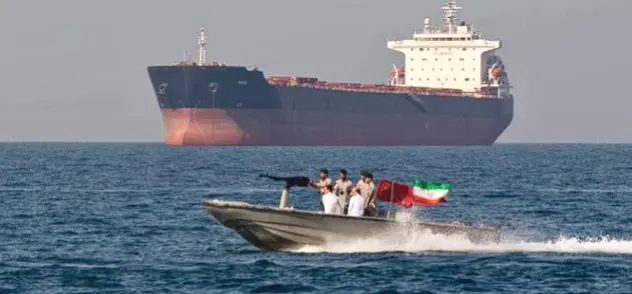
Washington: China keeps Iran’s shadow oil market alive. Before the Iran war erupted, Beijing snapped up 95% of Tehran’s crude via sanctioned tankers, elusive middlemen, and covert finance routes, according to Kpler shipping data. President Donald Trump’s Strait of Hormuz blockade therefore doubles as a shot at Tehran and its top customer in Beijing.
Monday’s US statement flagged vessels in Iranian waters for “interception, diversion and capture.” Enforcing this across Iranian ports, eastern Hormuz coasts in the Gulf of Oman, and the Arabian Sea would zero out Tehran’s oil shipments. The White House logic: Starve Iran’s economy and make China feel the squeeze, potentially nudging Beijing to urge negotiations.
War Windfall Shields Tehran
Iran braced for export cuts in a US clash, particularly after sealing Hormuz. Yet seven weeks on — and Hormuz still shut — Tehran has banked gains over pain. Over 40 days of combat, the US allowed unchecked tanker fills, riding high prices to profit. A sanctions pause let the regime charge premiums, ditching steep discounts, as reported by The Economic Times.
Rough estimates, sourced from Kpler and Vortexa pre-war shipment data, indicate Iran’s daily oil income hovered around $100 million before the conflict. Since February 27, it jumped to approximately $175 million. While banking curbs hinder full repatriation, the surplus has bolstered stockpiles—equaling one month’s pre-war earnings.
Triggering the blockade would hammer Iran’s economy further amid battlefield losses; storage facilities would overflow swiftly, prompting oil well shutdowns in a matter of days to weeks and deepening fuel shortages at home. Iran’s history of defiance offers a cautionary note: During the 2020-2021 Trump-era “maximum pressure” sanctions, exports plummeted below 250,000 barrels per day as COVID crushed global prices, slashing daily crude earnings to a trickle. Tehran weathered it by smuggling via “ghost fleets,” bartering for essentials, and leaning on domestic cuts — never buckling under the strain.
China’s Supplies In Crosshairs
China has dodged the war’s worst. Pre-conflict, Iran fed 11% of its oil needs, after Russia’s 20% and Saudi’s 14%. Shipments rolled on, sparing Beijing the gaps plaguing Asia.
Iranian port blockades flip the script. China has lost 20% of imports already, bypassing Hormuz via Saudi and UAE routes notwithstanding.
Fallback: Tap the planet’s biggest oil stockpile—over 1 billion barrels in layered strategic and commercial caches (IEA estimates), amassed over 10 years. These reserves, stored in underground facilities and bonded warehouses nationwide, allow controlled releases to stabilize domestic prices and industry without market panic—lessons from China’s 2017-2018 reserve tests during U.S. tariff spats.
U.S. leaders eye Beijing twisting Tehran’s arm, akin to its 2023 Saudi-Iran pact. But that sway flowed from oil cash—cut off here. “The current ceasefire is highly fragile, with the region at a critical turning point,” China’s Foreign Minister Wang Yi said on Monday. “The immediate priority is to prevent a resumption of hostilities and sustain the hard-won truce.” Beijing’s playbook favors patience: During the 2019 Gulf tanker crisis, it drew minimally on stocks while diversifying suppliers, emerging unscathed.
Reserves Tip Math Against Washington
Instead of rushing to cement peace, Beijing’s rulers can bide time on stockpiles—likely readied for Taiwan storms or US containment plays. Iranian-free weeks? Doable, with phased draws covering 10 million barrels daily needs. Two months? Just 10% reserve depletion, per CNPC simulations, leaving ample buffer for prolonged disruptions. This endurance lets China court alternatives like ramped-up Russian pipelines or Venezuelan cargoes, all while avoiding domestic unrest from fuel hikes.
Bottom line: Odds stack against the blockade. It risks escalating proxy frictions—say, Houthi reprisals or militia strikes—without bending Tehran, while straining US Navy logistics in contested waters (per CSIS wargames). Borrowing from Keynes, Iran stays stubborn — and China stays steady — longer than Trump stays in the black, as war costs balloon past $2 billion weekly amid election-year fiscal scrutiny.