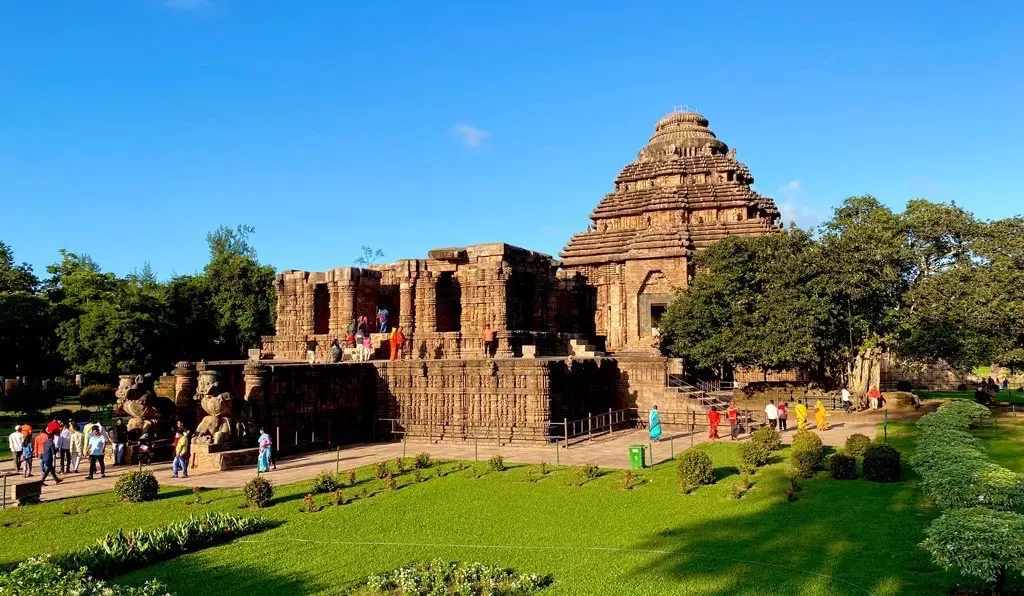
Bhubaneswar: As the Archaeological Survey of India (ASI) started the process to remove century-old sand from the sanctum sanctorum of the Konark Sun Temple, the focus is on safety issues. What is of great significance now is the question—Is it safe to remove the sand?
While views may differ, an assessment that was conducted by IIT Madras on the condition of the sand inside the sanctum had a positive approach. It indicated that its removal would not pose any threat to the temple. According to reports, authorities started the work based on this finding.
The process of sand removal has also gone hi-tech. The drilling team is taking help of robotics and data-driven engineering techniques.
ASI’s technical team has started drilling a 6×5 ft passage through which the temple—now a UNESCO World Heritage Site—was filled with sand and sealed. Once done, sand removal will begin manually, reported Indian Express.
To technological team has opted for a zero-vibration method to avoid damage.
Know the history
The Jagamohan or the hall was filled with sand by the British between 1901 and 1903 to “prevent structural collapse and provide stability” to the monument. The temple has been designed as a chariot for the Sun God. Since then, the hall has remained inaccessible. Visitors had been viewing it only from outside. The temple tower that once housed the deity, had collapsed.
When was it attempted to drill it last?
The last such attempt was made in the mid-1950s by then DG Debala Mitra. He had found rainwater seepage was causing moss growth and damaging the khondalite stones.
It was built in the 13th century by King Narasimhadeva I of the Eastern Ganga dynasty. The temple is believed to have taken 12 years and around 1,200 sculptors to complete.