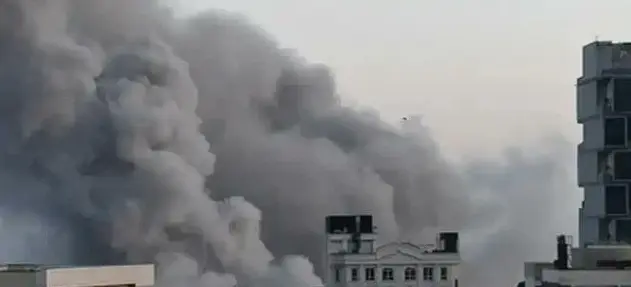
Washington: United States and Iran traded heavy strikes overnight as the three‑month conflict intensified, with Iran warning it would target ships in the Strait of Hormuz after reporting attacks on its southern coast and on US naval assets, AFP reported.
US forces launched a fresh round of strikes against multiple targets in Iran late on Wednesday, the US Central Command said, describing the actions as “additional self‑defence strikes” that began at 5:15 pm Washington time. Iranian state media reported explosions in the south near the Strait of Hormuz and said enemy projectiles struck Qeshm, Kargan and Sirik.
After the US strikes, Iran’s Khatam al‑Anbiya command declared the strait “completely closed to all types of vessel” and warned that “any vessel traffic through the Strait of Hormuz will be targeted,” Tasnim news agency reported. Tehran also said its navy struck two ships attempting to transit the waterway. US Central Command, however, denied the closure and said commercial traffic was continuing through the strait.
Meanwhile, Iranian news outlets reported attacks on the US Fifth Fleet in Bahrain, claiming damage to communications antennas and radar. Centcom and Bahraini officials have offered differing accounts about the scale and effects of those strikes.
Iran Denies Trump’s Claim
President Donald Trump told reporters that Iranian leaders called the White House asking him to halt the strikes while the bombing was underway. However, Iran’s Revolutionary Guards denied making such a request. Trump also said US forces fired 49 Tomahawk missiles and that some targets were within about 40 miles of Tehran. When pressed on next steps, he warned that if Iran rejected US terms, “we’ll bomb the S out of them tomorrow night,” acco
rding to a Fox News reporter.
Trump accused Tehran’s negotiators of stalling and taking the US for fools, saying they had been “playing us for suckers.” He framed the strikes as deliberate pressure, declaring the US had “hit them hard yesterday” and would do so again, and adding that a deal had been close but was thwarted because Iran kept dragging things out.
Defense Secretary Pete Hegseth indicated the US could continue the campaign into a third night, calling forthcoming strikes likely to be “strong” and “clear.” Hegseth framed the operations as a reaction to what officials called Tehran’s “unwarranted and continued aggression.”
Regional Security & Global Markets Hit
The fighting has disrupted regional security and global markets. Tehran’s near‑closure of the Strait of Hormuz — the chokepoint through which roughly a fifth of the world’s oil flows — helped push energy prices higher. The US said it had secretly escorted about 100 million barrels of oil through the contested waterway.
The conflict began with heavy US and Israeli strikes on Iran and briefly moved into a shaky truce. That truce unraveled after Iran shot down a US helicopter; Washington reported losing two crewed aircraft to Iranian fire during the war, though both sets of aircrew were rescued.
Several Gulf states reported engaging incoming Iranian missiles and drones. Bahrain said it intercepted and destroyed multiple aerial threats, Jordan reported shooting down five missiles, and Kuwait said its air defenses engaged hostile targets. Tehran warned neighbouring countries not to let the US or Israel use their territory for attacks.
Global leaders Urge Restraint
UN Secretary‑General António Guterres warned against a return to “full war,” and a coalition of 22 countries — including the US and European states — publicly urged Iran to stop attacks on foreign soil, saying such actions “undermine national sovereignty and international norms.”
Diplomatic efforts continued despite the fighting, with Qatari envoys reportedly traveling to Tehran to try to bridge remaining differences. Iran has linked any settlement to wider regional demands, including a truce in Lebanon after Iran‑backed Hezbollah fired rockets at Israel in early March.
Markets reacted: global stocks fell and oil climbed about 2% as investors weighed renewed violence, inflation concerns, and sector weakness.