We are in the business of building buildings for our customers and creating world-class infrastructure. But over the years, I have come to believe that this is only the visible part of our business. The deeper business is about building lasting relationships and earning blessings.
In real estate, getting a customer is important. Sustaining that customer’s trust is even more important.
A small incident from 2012 taught me this in a way no management book ever could.
One evening, our Sales Head informed me that a prospective buyer wanted to meet me before finalising a flat and its price. A young couple, Manas and Manaswi, walked into my room. Both were below thirty, newly married, and working as IT professionals in Bangalore. They had chosen a flat costing around ₹49 lakh. Their maximum budget was ₹42 lakh, and they wanted to know whether we could reduce the price. I began talking to them – not about the flat, but about themselves. They had been married for about a year and together earned around ₹85,000 a month.
“Why do you want to buy a house now?” I asked.
They wanted to invest in property.
“How will you arrange the booking amount?”
“Our parents will help us.”
“And the EMI?”
“We will pay it from our salaries. We are expecting increments next year.”
Something did not convince me. My concern was no longer whether I could sell them a flat. I was wondering what would happen after I sold it to them. They were newly married, living in Bangalore, and just beginning their careers. After paying a substantial EMI, how much would remain for rent, daily expenses, travel, emergencies – and simply enjoying their life together?
So I told them something rather unusual for someone in the business of selling homes: “Don’t buy this flat.”
I told them there would be time to buy property. They should first enjoy the early years of their marriage, travel, build their careers, and become financially stronger. They were determined to invest. Since the ₹49 lakh apartment was beyond their budget and we could not reduce the price further, they considered buying a smaller unit. That should have solved the problem. We would retain the customer and close the sale. But I continued trying to convince them otherwise. Eventually, they left without buying anything.
My Sales Head was unhappy. Understandably so. We had lost a customer.
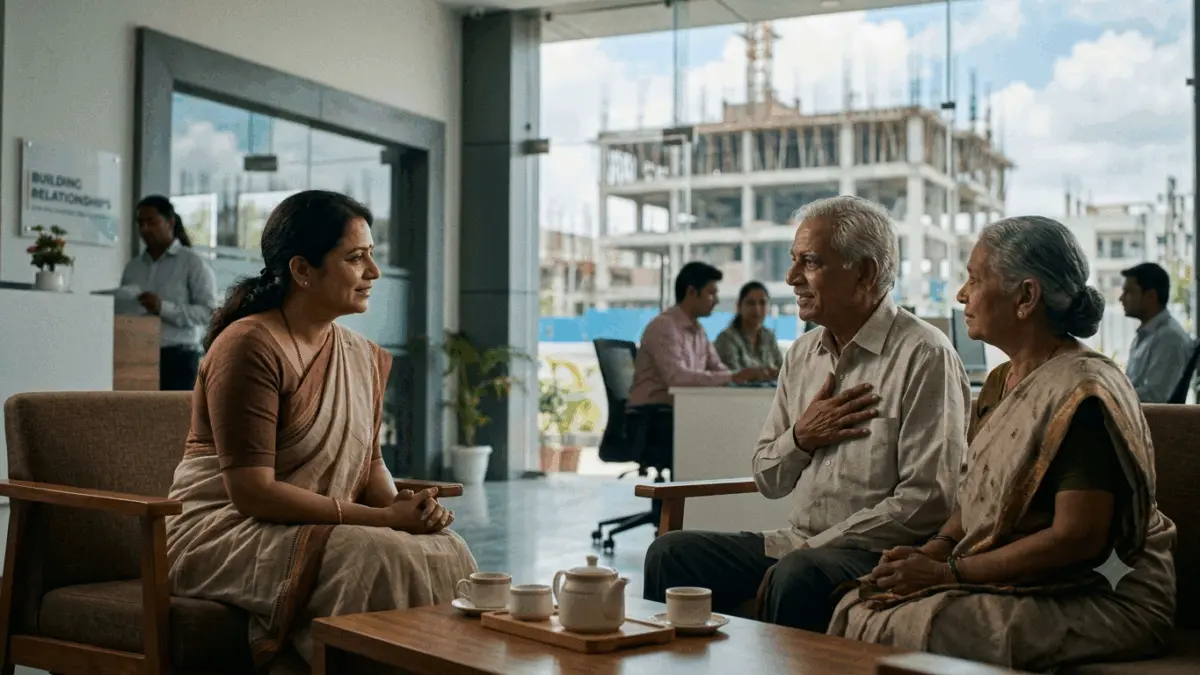
Two days later, as I entered the office, I noticed an elderly couple waiting in the reception lobby. They greeted me warmly and thanked me. I had no idea why.
The gentleman introduced himself as Manas’s father, a retired Chief Engineer. The couple had their own spacious house in Saheed Nagar, one of Bhubaneswar’s prime residential localities.
Over a cup of tea, they told me how relieved they were that their son and daughter-in-law had postponed the purchase. They wanted the young couple to enjoy life, establish their careers, and become financially stronger before taking on a housing loan.
They had come simply to say thank you. That meeting has stayed with me.
On the balance sheet that day, perhaps I had made the wrong decision. We had lost a sale. But had we really lost?
Working across different verticals of a business conglomerate has given me the privilege of meeting thousands of people – entrepreneurs, professionals, consultants, investors, bankers, customers, partners, employees, and stakeholders. When you work closely with so many people, you learn by watching them.
I have met many successful people, and their reasons for success are different. Some are intelligent, some extraordinarily hardworking, some brilliant communicators, and others courageous risk-takers. But among people whose success has endured, I have repeatedly observed one quality: Character.
Character is not merely a moral virtue. In business, it has practical value. Character creates trust. And trust is a form of capital. Land, buildings, cash, investments, and liabilities appear on a balance sheet. But where do we record credibility? Where do we value a promise kept when breaking it would have been more profitable? Where do we account for a decision that costs us money today but allows us to sleep peacefully tonight?
We don’t.
Yet these invisible assets often determine who stands beside us when circumstances become difficult. There is also a difference between reputation and character. Reputation is what people think we are. Character is what we actually are. Reputation is built in public. Character is often tested in private – especially when doing the right thing comes at a cost.
Nobody would have blamed me for selling Manas and Manaswi a flat. They had come voluntarily. They wanted to buy. They were educated professionals prepared to take a loan. It would have been a perfectly legitimate transaction.
But perhaps, without consciously framing it that way, I was asking myself a simple question: If they were my own children, what would I advise them to do? That question changed the transaction.
Perhaps character is built in precisely such moments – not through grand declarations, but through small choices when profit and conscience quietly sit on opposite sides of the table. Money can be lost. Businesses can go through difficult cycles. Positions change, and markets rise and fall. But if people trust your character, you still possess something with which you can rebuild. Trust is deposited slowly – one decision at a time.
So, to a young entrepreneur, I would certainly say: learn finance, understand your numbers, negotiate well, embrace technology, build networks, and pursue growth. But while building your business, remember that you are simultaneously building yourself. Every promise you keep is a deposit. Every time you choose fairness over convenience is a deposit. Every time you place a human being above a transaction, you add something to an account whose true value may become visible only years later.
We thought we had lost a customer that evening in 2012. Looking back, I believe we earned something far more valuable. We earned a blessing. Buildings will age. Balance sheets will change. Designations will pass. But the trust and blessings we earn through the way we conduct ourselves can remain long after everything else has changed.
The greatest asset you will ever build may never appear on your balance sheet. It’s your character.