Rourkela: Scientists at the National Institute of Technology, Rourkela, (NIT-R) have developed an innovative and affordable way to remove harmful dyes from industrial wastewater by turning waste from the coal and steel sectors into a highly effective cleaning material.
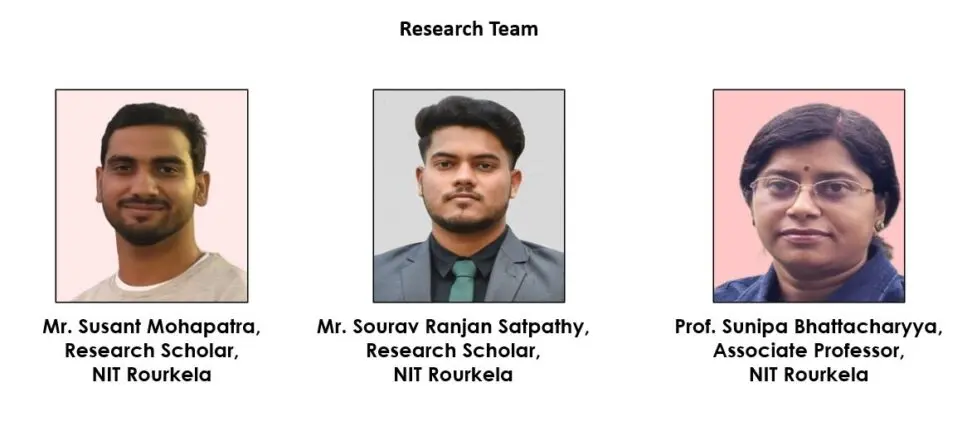
The team from the Department of Ceramic Engineering, led by Associate Professor Sunipa Bhattacharyya along with research scholars Susant Mohapatra and Sourav Ranjan Satpathy, created a ceramic-based adsorbent using fly ash, Ground Granulated Blast-Furnace Slag (GGBS), and raw kaolin clay.
In laboratory tests, the material achieved over 95% removal of Methylene Blue, a common dye discharged by textile, dyeing, and printing industries.Industrial wastewater containing synthetic dyes poses a serious threat to rivers, lakes, and groundwater, harming aquatic life and potentially affecting human health. Traditional treatment methods are often costly, energy-intensive, and produce additional waste, making them imp
ractical for widespread use, especially in developing regions.
The NIT Rourkela solution stands out for its sustainability and low cost. The ceramic adsorbent can be produced for approximately Rs. 25–50 per kg. A key innovation is the use of raw kaolin clay instead of the more common heat-treated metakaolin, which eliminates an energy-heavy step and makes the process greener and more economical.
Prof Bhattacharyya highlighted this advantage, stating: “A notable aspect of our research is the use of raw kaolin clay rather than heat-treated metakaolin, which is commonly employed in geopolymer-based adsorbents. By eliminating this energy-intensive heating step, we have been able to make the production process more sustainable and economically viable.”
Fly ash from thermal power plants and GGBS from iron and steel industries are generated in massive quantities and create their own disposal challenges. By repurposing these by-products, the technology not only tackles water pollution but also helps manage industrial waste more effectively.
The research, published in the journal Chemistry Select, supports the United Nations Sustainable Development Goals, specifically SDG 6 (Clean Water and Sanitation) and SDG 12 (Responsible Consumption and Production).Looking ahead, the team plans to develop porous shaped adsorbents from similar waste materials and evaluate their performance against a wider range of pollutants. The approach could offer industries a practical, cost-effective tool for wastewater treatment while promoting a circular economy where waste from one sector becomes a resource for another.