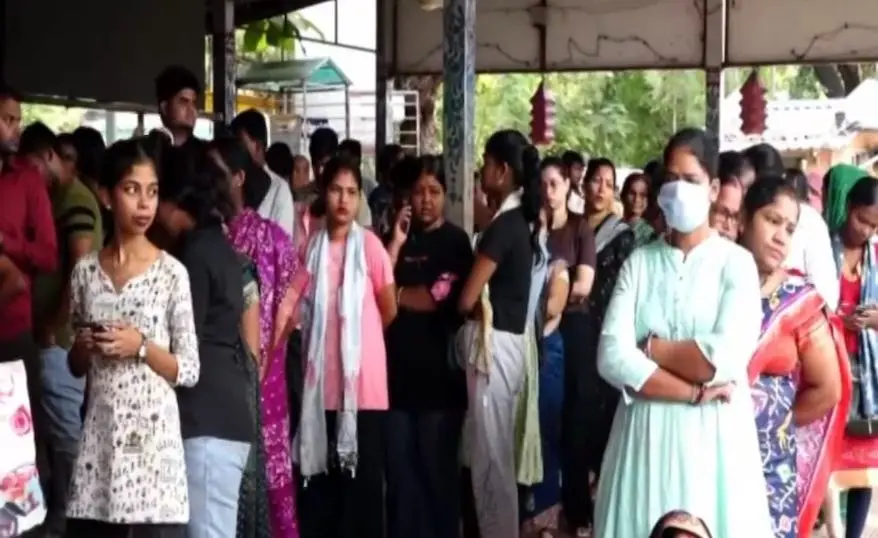
Bhubaneswar: The indefinite statewide agitation by government doctors under Odisha Medical Services Association (OMSA) has entered its third day on Friday, severely disrupting healthcare services across Odisha.
Despite stern warnings from the state government, including threats of salary suspension and termination, doctors are continuing their protest over a 10-point charter of long-pending demands.
The strike, which began on July 1 coinciding with National Doctors’ Day, has led to the shutdown of outpatient departments (OPDs) and routine services in government hospitals from major cities like Bhubaneswar and Cuttack to remote rural areas. Peripheral health facilities at block and district levels have been particularly hard hit, forcing a surge of referrals to apex institutions such as SCB Medical College and Hospital in Cuttack.
Government’s Strict Stance
The Odisha Health and Family Welfare Department has issued directives invoking the Odisha Essential Services (Maintenance) Act (OESMA), 1988 — via a Home Department notification — which classifies health services as essential and prohibits strikes by doctors and paramedics. The department
has labeled the boycott as “gross misconduct,” citing violations of the Orissa Government Servants’ Conduct Rules, 1959.
Regular medical officers from the OMHS cadre face salary withholding for non-performance of duties, while contractual and ad-hoc doctors participating in the strike risk termination after due notice. Authorities have been instructed to take immediate action against absentees.
This is not the first confrontation. OMSA had earlier organised symbolic protests, including a two-hour OPD boycott in January 2026, but doctors claim the government failed to honour assurances on their demands.
Key Demands
The doctors are pressing for:
>> Implementation of the Dynamic Assured Career Progression (DACP) scheme as per central pay structures.
>> Pay parity with central counterparts.
>> Proportionate cadre restructuring.
>> Incremental incentives for specialists and administrators.
>> Enhanced workplace safety and security measures.
>> Regularisation of ad-hoc doctors.
>> Comprehensive health insurance.
>> Other service-related issues like transfer policies and infrastructure improvements.
Patients Suffer as Services Collapse
The standoff has led to long queues and overcrowded waiting areas. Outstation patients from distant districts report being stranded for days.
A worried relative at SCB told reporters, “People have traveled from distant districts and have been stranded here for two to three days. The elderly and critical patients are suffering immensely. We request the government to intervene and resolve this swiftly.”
Emergency services are reportedly continuing in some places, but routine care, OPDs, and peripheral facilities remain heavily impacted, putting vulnerable populations at risk.