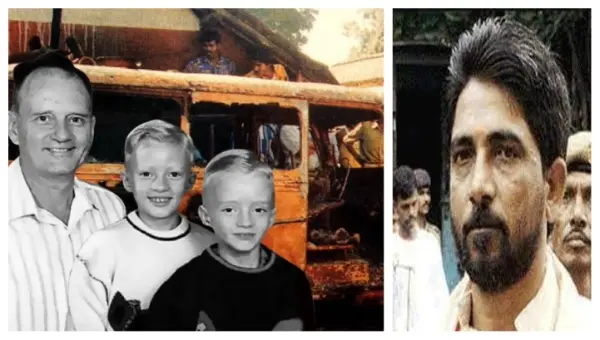
Bhubaneswar: The Odisha State Sentence Review Board (SSRB) meeting scheduled for Tuesday to consider the remission plea of Graham Staines murder convict Ravindra Pal alias Dara Singh and other prisoners has been postponed due to the unavailability of members.
The Home Department is expected to announce a fresh date for the meeting shortly, a government officer confirmed.
This marks another delay in the long-pending remission process for Singh, who has been serving a life sentence for over 25 years.
Background of the Case
The brutal incident occurred on January 22, 1999, in Manoharpur village, Keonjhar district, when a mob set ablaze the station wagon in which Graham Staines, a missionary working with leprosy patients, and his sons Philip (10) and Timothy (6) were sleeping. Dara Singh, then associated with Bajrang Dal, was identified as the leader of the mob.
Singh, a native of Kokar village in Auriya dist
rict of Uttar Pradesh, has been in jail since his arrest in 2000. He was first sentenced to death by a CBI court in Bhubaneswar in 2003, which was commuted to life sentence in May 2005 by Orissa High Court. The Supreme Court upheld the life sentence in January 2011.
Supreme Court Proceedings
On July 9, 2024, the Supreme Court issued notice to the Odisha government on the plea for Singh’s premature release. Through advocate Vishnu Shankar Jain, Singh said he had spent over 24 years in incarceration and “repented” the consequences of his action taken in a fit of “youthful rage”.
Following which, the apex court was informed that his remission plea is under the state’s active consideration.
On May 13, Additional Solicitor General K M Nataraj informed the court that the SSRB would meet on May 26 to examine Singh’s remission plea, following which the next hearing was posted for July 14.
Singh’s counsel, A P Singh, expressed optimism that the review board would rule favourably, noting that he met all requisite criteria. The defence has drawn parallels with the release of convicts in the Rajiv Gandhi assassination case to support the plea.
Singh’s plea, however, sparked public debate, with some viewing it through the lens of reformative justice while others recall the horrific nature of the hate crime that drew international condemnation.