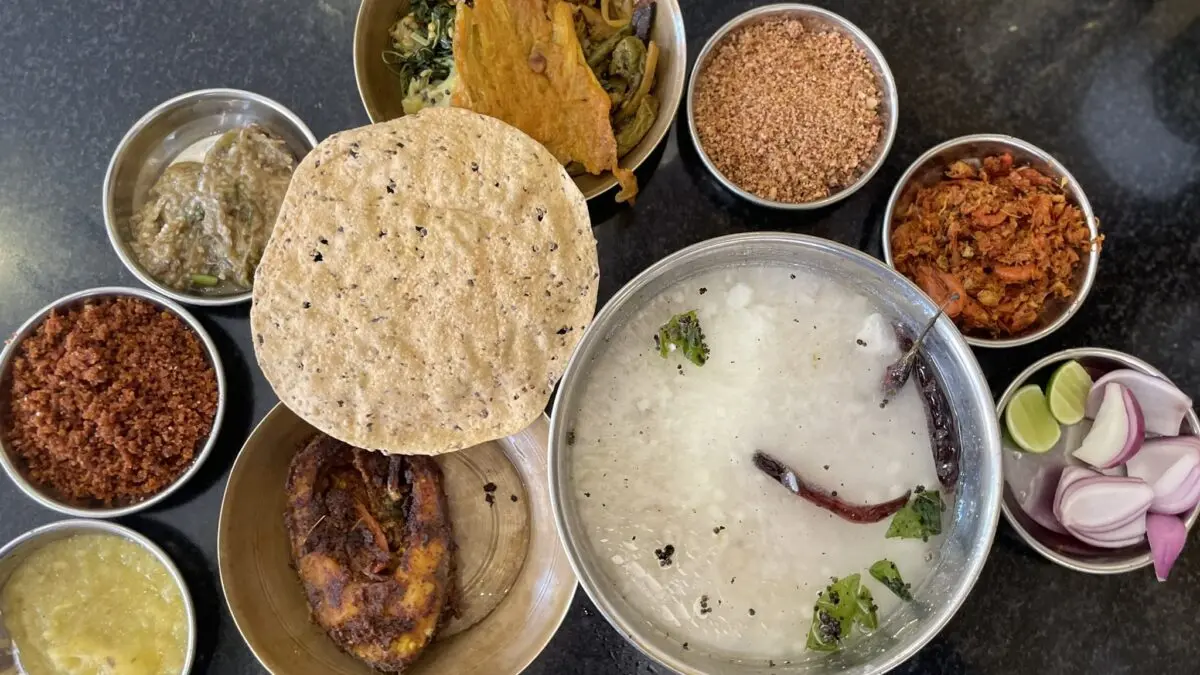
“If summer arrives, can pakhala be far behind?” This evocative line serves as the perfect prelude to the story of fermented rice in Odisha. As the scorching summer heat bears down, people across the state instinctively turn to their beloved staple: pakhala. A time-honoured indigenous dish, this fermented rice is cherished by Odias at home and in the diaspora alike, transcending barriers of caste, class, religion, and region.
Far more than a gustatory delight, it stands as a vital expression of Odia asmita—a powerful marker of tradition, resilience, and collective identity.
With the onset of summer, a striking scene unfolds: rich and poor, rural and urban, elite and ordinary, all gravitate toward bowls of cool, fermented rice. In this shared culinary instinct, pakhala becomes a dietary emblem of Odia gastronationalism—an egalitarian food culture that binds the community through a common palate and practice.
While similar forms of fermented rice are consumed in other parts of eastern, central, and southern India—across Bengal, Assam, Keralam, and Jharkhand—pakhala occupies a uniquely deep cultural and emotional space in Odisha. Its significance extends beyond mere sustenance. It is offered to the deities of Shree Jagannath Temple, blurring the lines between the physical and the metaphysical, the mundane and the divine. In this sense, Odia fermented rice becomes a living illustration of what Émile Durkheim described as the interplay between the sacred and the profane. It is not just food for the body but a cultural medium that symbolically connects human appetite with spiritual devotion. Thus, it stands as more than a culinary tradition—it embodies the intertwined agricultural rhythms and spiritual ethos of Odisha.
Pakhala, a bowl of fermented rice immersed in water, is humble in its composition yet remarkably versatile in taste. It is best enjoyed with an array of accompaniments, such as salt, curd, lemon, onions, green chillies, fried vegetables, or even fish fries. These additions not only heighten its flavour but also enrich its nutritional value, transforming a modest preparation into a balanced and deeply satisfying meal. At its core, it stands as a quintessential subaltern dish, often described as the “poor man’s gruel”. Its accessibility and simplicity make it a staple among those who rely on on simple, readily available ingredients.
Traditionally, pakhala is prepared by soaking leftover or freshly cooked rice in water, and allowing it to ferment overnight. As it slowly ferments, a slow transformation occurs: the rice develops a mildly tangy, sour, and refreshing character. With longer fermentation, the flavour deepens into a distinctive zest that defines its unique taste and temperament. As I often joke with my non-Odia friends, mid-summer may not be the best time to visit Odia offices for urgent work—because you might find officials blissfully surrendering to the languid charm of a hearty fermented meal, drifting into a brief, contented stupor. Such are the delightful “mid-summer illusions” of the pakhala-loving Odia.
According to Jagannath tradition, a variety of fermented rice preparations—ranging from flavoured fermented rice and curd-based fermented rice to sweeter variants infused with jasmine, lemon, or butter—are offered to the deities of the Jagannath Temple. Deeply woven into Jagannath culture, pakhala forms an integral part of the sacred Chhappan Bhoga, the revered ensemble of 56 offerings. Even today, tanka torani (fermented rice water) retains its ritual importance in temple and visitors can still partake in this living tradition. Over time, several variants of pakhala have evolved and endured: Basi Pakhala (overnight fermented), Saja Pakhala (freshly prepared), Dahi Pakhala (with yoghurt), and more.
Through these ritualistic and culinary threads, pakhala carries a distinctive legacy of origin, history, authenticity, and cultural dignity. Rarely does one find a food so seamlessly shared between the divine and the devotee, in Odisha, it transcends the boundary between mortal sustenance and sacred offering, making it truly exceptional in both spirit and practice.
Historically, pakhala is deeply rooted in Odisha’s agrarian life. It has endured because it is cost-effective, simple to prepare, easy to digest, and remarkably effective as a natural coolant against the oppressive summer heat.
Climatically and geographically, pakhala may be seen as a dietary gift to Odisha shaped by its proximity to Bay of Bengal. The sea yields fish and salt, the fertile plains provide rice, and the region’s frequent natural challenges have long encouraged reliance on such accessible and resilient forms of nourishment. Thus, it is more than culinary preference; it is a survival strategy forged by coastal ecology, humid climate, economic realities, and historical experience.
Though it now appears in modern avatars in cities, clubs, hotels, and elite gatherings, its soul remains tied to the frugal world of the Odia peasantry. For generations of labourers toiling under the harsh sun, it has offered both sustenance and solace—embodying the profound link between food, labour, and environment.
In this way, Odia fermented rice quietly speaks to a modern world grappling with poverty, class and caste divisions, climate anxiety, resource scarcity, and the pressures of globalisation. It shows how a traditional, locally rooted practice can provide an egalitarian and sustainable answer to many of these contemporary challenges.
Similarly, rising urban poverty and lifestyle conditions such as obesity—often linked to overconsumption—highlight the need for simpler, balanced dietary options. Indigenous, cost-effective foods like pakhala offer a compelling alternative. The growing number of pakhala-centric eateries in cities like Bhubaneswar, Bengaluru, Hyderabad, Delhi, and Mumbai signals a heartening revival of both health and heritage, bridging tradition and modernity.
Pakhala should not be dismissed because of its subaltern roots. Instead, it deserves recognition, preservation, and promotion for the indigenous knowledge, skills, cultural memory, and ecological wisdom it carries. Policymakers, food historians, community leaders, and stakeholders must come together to safeguard and celebrate this living tradition. It is far more than a meal; it is a cultural experience—an edible archive of generational resilience, egalitarian values, sustainable living and shared identity.
To view pakhala as a kind of culinary chromosome is to acknowledge its role in encoding and transmitting cultural continuity. At a time when India navigates tensions between desi and global food cultures, such traditions offer both grounding and guidance—reminding us how the most rooted practices can counter the excesses of contemporary eating habits.
(The writer is Professor at the Department of English, Faculty of Arts, Banaras Hindu University)