Dubai: Iran’s foreign minister said on Tuesday the US–Iran deal to end the war would require Israel to pull out of Lebanon, casting doubt on the still-secret agreement and whether disputes over its terms could keep fighting going, AP reported.
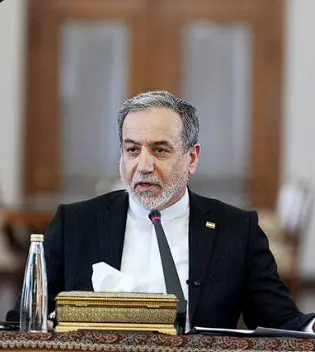
Iranian Foreign Minister Abbas Araghchi told diplomats from other countries that Israel’s continued occupation of southern Lebanon would violate the memorandum of understanding (MoU) between the United States and Iran, according to comments aired on Iranian state television.
“The end of the war in Lebanon is an inseparable part of complete end of the war,” Araghchi said. “Without the withdrawal of Israeli forces from the territories they occupied during this war, the war has not fully come to an end.”
Araghchi said further Israeli attacks on Lebanon “will be considered by us a violation of the Memorandum of Understanding.”
The Uni
ted States hasn’t confirmed whether Lebanon was included in the final deal, but Araghchi’s account conflicts with what Israeli officials have said about the agreement ending the war that began with joint U.S.-Israeli airstrikes on Feb. 28.
Israel is not part of the agreement. Prime Minister Benjamin Netanyahu on Monday said it was Trump’s decision, noted that Israel had its own priorities, and declared it would remain in a buffer zone in Lebanon “as long as necessary.”
This uncertainty resembles earlier negotiation rounds, including the April temporary ceasefire. That deal didn’t lead to broader peace or to reopening the Strait of Hormuz after the United States and Iran announced conflicting frameworks.
The mismatch shows how much of the agreement still appears unresolved ahead of a ceremonial signing scheduled Friday in Geneva.
The deal aims to deliver a substantial truce in a months-long war that has killed thousands across the Middle East — including senior leaders of Iran’s theocracy — and pushed up prices for fuel, food and other basic goods far beyond the region.
On Monday, a senior US official who spoke to reporters on condition of anonymity to discuss the agreement’s outlines said the unpublished deal mandates the “immediate” opening of the strait and the lifting of the blockade.
It also includes the possibility of releasing Iran’s frozen funds, easing sanctions and creating a $300 billion fund to rebuild Iran—all contingent on Iran meeting benchmarks, another senior US official said.