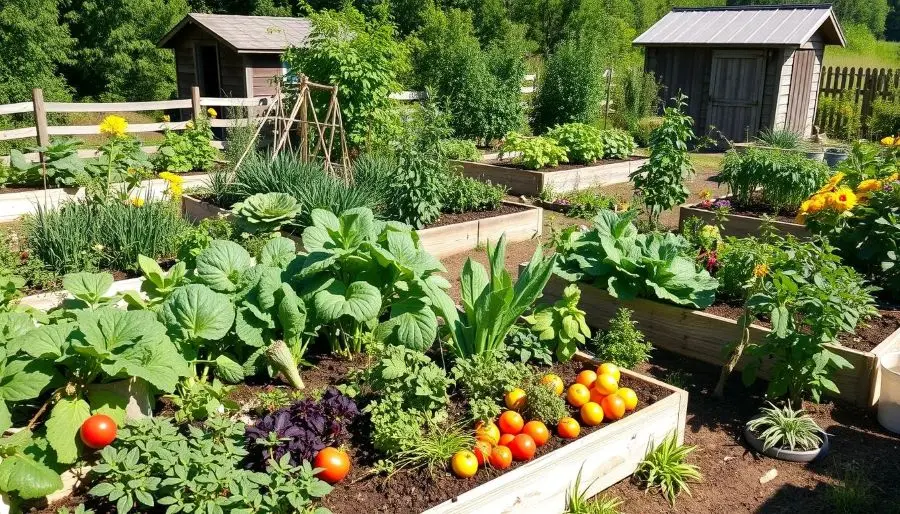
Faster urbanisation has led to increased distances between food production centres and urban settlements, resulting in longer supply chains and a decrease in freshness and nutritional value of food.
We often dream of farming around us, yet we trade off between economics and geography by taking advantage of our selfish goal of covering more than the approved plan by leaving behind zero space for fulfilling dreams of farming. And then we live the rest of our lives from inside concrete blocks watching through the glass window how better the neighbour is living by obeying building plan that includes a garden of vegetables in ground, a terrace having clippers of grapes etc. and a rooftop that produces many exotic products inside greenhouses and in open sky.
Don’t many of us dream of walking into the backyard and pluck a few fresh tomatoes or maybe some mint for herbal drink or curry leaves for curd rice? Yes, that’s the magic of having a kitchen garden. It’s easy, and honestly, a quiet break from the crazy everyday life.
Understanding the importance of growing vegetable in urban areas is a movement that can sprout by formalising household kitchen garden as part of gardening. Kitchen Garden Day is observed on the last Sunday of August every year. It’s a day for decentralised celebration of food produced on a human scale.
So on this Kitchen Garden Day, as a practitioner and urban planner, I can vouch no matter how big or small a house we have, there is no shortage of space for Kitchen Garden. Once we have a series of kitchen gardens, it will benefit a lot, as follows:
Local Food Security: Bhubaneswar should aim to produce a significant portion of our daily vegetables within city limits to reduce dependency on external supply chains by incentivising communities or provide public spaces in master plans to facilitate communities, rent sites to grow vegetables for own as well as local needs.
Rooftop and Balcony Utilisation: In urban planning exercise, houses be encouraged with additional FAR (floor area ratio) for having kitchen gardens. Similarly houses with limited ground space should take advantage of using rooftops and balconies to grow edible plants.
Urban Cooling: Growing plants on building exteriors and balconies will help lower ambient temperatures and cool down dense urban heat islands.
Community Spaces: Common areas and shared housing society spaces can be turned into green zones where individual or community gardening thrives.
Being an urban planner, I often test ideas in my home garden. So do we have kitchen garden in rooftops as well as on ground and balconies? We grow many seasonal fruits, vegetables using home-grown manures. This year, we harvested dragon fruits as new addition to our rooftop. On ground, we often grow seasonal vegetables.
By having a kitchen garden, urban dwellers can grow their own fresh produce at home, making good use of empty tins, old utensils, and clay flower pots, ensuring a constant supply of nutritious food for themselves and their families. This activity not only saves money and time but can also provide a healthy, practical and environmentally-friendly hobby for the whole family.
Similarly, kitchen garden is a good learning place for children; rather a lab of innovation. I realised kitchen garden is a very good therapy for stress and depression, and also improves concentration along with first step towards healthy living.
We’ll begin with small experiment, make mistakes, and enjoy every green moment. Because a home kitchen garden isn’t just about food, it’s about growing a life that’s connected, mindful and genuinely sustainable.
Kitchen gardens can serve as sites for education, development and skill training opportunities. Some cities have urban planning programmes that use community kitchen garden to help teach young people about science, environmental stewardship and healthy eating.