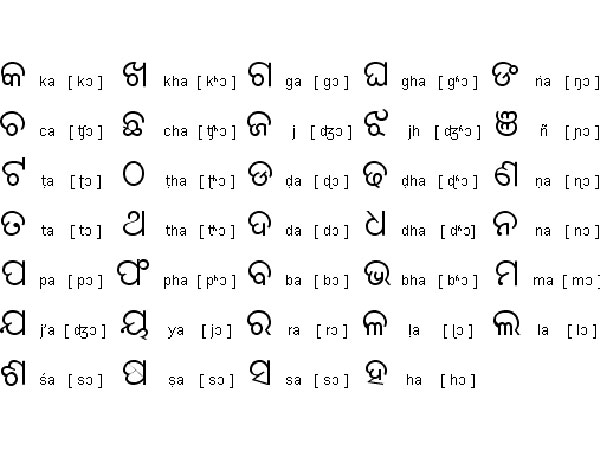
In 1936, Odisha made history. It became the first province in independent India to be carved out on a purely linguistic basis. Not geography. Not administrative convenience. Language.
That decision was a formal acknowledgment that Odia was no ordinary tongue — it carried over 1,500 years of recorded antiquity, descended from Magadhi and Odra Prakrit, with a script shaped by the physical demand of carving text onto palm leaves without tearing them. By the 14th century, Sarala Das had already given the world an Odia Mahabharata. Today, Odia holds the official status of a Classical Language of India. It earned that recognition.
This makes what you hear on the streets of Bhubaneswar today genuinely hard to explain.
Walk into a mall, a school corridor, an office, a shop, or just stand at a street vendor’s cart — and the language you will most commonly hear between people is Hindi. Not because they don’t know Odia. Not because the other person is from outside. Simply because somewhere along the way, speaking your own mother tongue in public began to feel insufficient. A little too ordinary. Not quite the image people want to project.
This is not a small cultural shift. This is a community in the process of quietly disowning itself.
There are two major propellers for this kind of behaviour. The first is mainstream media — the endless consumption of Hindi films, web
series and news channels that have built a slow, convincing vanity loop. People absorb the language of celebrities and newsreaders, and begin to associate it with a kind of sophistication their own language apparently cannot provide. The second propeller is more deliberate. A majoritarian political project has been steadily at work, resolving India’s extraordinary linguistic diversity not by celebrating it, but by flattening it — pushing a single vernacular as the natural language of national belonging, and leaving every other language to feel, by quiet implication, regional and therefore lesser.
Odisha is not alone in facing this pressure. But what separates it sharply from its southern neighbours is how it has responded.
Travel to Karnataka, Tamil Nadu, Kerala, or Andhra Pradesh, and you will encounter something quite different. A majority of young educated urban professional in Bengaluru will answer you in Kannada and not apologise. A shopkeeper in Chennai conducts his business in Tamil as a matter of settled dignity. These are not acts of aggression or provincialism — they are simply people who have never been convinced that their language is something to be embarrassed about. The political pressure exists there, too. The Hindi media exists there, too. But it has not produced the same quiet surrender.
In Odisha, it has.
A language that its own speakers abandon in public life does not need a government order to die. It just quietly recedes — from offices, from schools, from markets, from children’s first words — until one day it exists only in official certificates and cultural festivals, which is to say, nowhere that actually matters.
Odia survived centuries of external rule to earn its own state. That was not a small thing. Whether it can survive the indifference of its own people is a question that deserves a more honest answer than it is currently getting.
(The views expressed here are entirely those of the author, and don’t in any way reflect the portal’s viewpoint or policy)