Over the past 50 years, the world’s population has grown at the fastest pace. From 4 billion in 1975, global population doubled to 8 billion in 2022. The United Nations has projected that the number will exceed 10 billion by 2100.
Since 2008, more than half of the world’s population has lived in cities, and this share is expected to keep growing.
Urban growth was such that many new terms such as Smart City, Solar City, Net Zero City, Cycling City etc. were coined. These are great concepts to address the need for sustainable development initiatives, which are more critical than ever.
Cities concentrate people and resources, which allows them to deliver essential public services — water and sanitation, health, education, energy, emergency response, and recreation — more efficiently. This agglomeration also creates opportunities for economic development, innovation, and social interaction. But this growth wasn’t linear, nor uniformly spread. In fact, the world’s population has been and continues growing unevenly. Some regions are largely uninhabited, while others have a very high population density or are shrinking.
This concentration of people usually happens in areas more suitable to humans — manageable landscapes with fertile land, water and other resources. They aren’t, however, free from natural and man-made hazards. Yet, urban life is not without challenges. Cities can also become spaces of deep inequality and segregation, where access to opportunities is unevenly distributed.
World Population Day is celebrated annually on July 11.
This is an appropriate occasion to reflect on how the population and built-up areas have evolved, and which challenges and opportunities arise from demographic change trends until 2030.
In an increasingly globalised world, understanding the challenges cities face and how they respond to them is becoming essential. Moreover, cities are uniquely positioned to contribute to filling gaps in today’s fragmented global governance, offering local solutions to global problems.
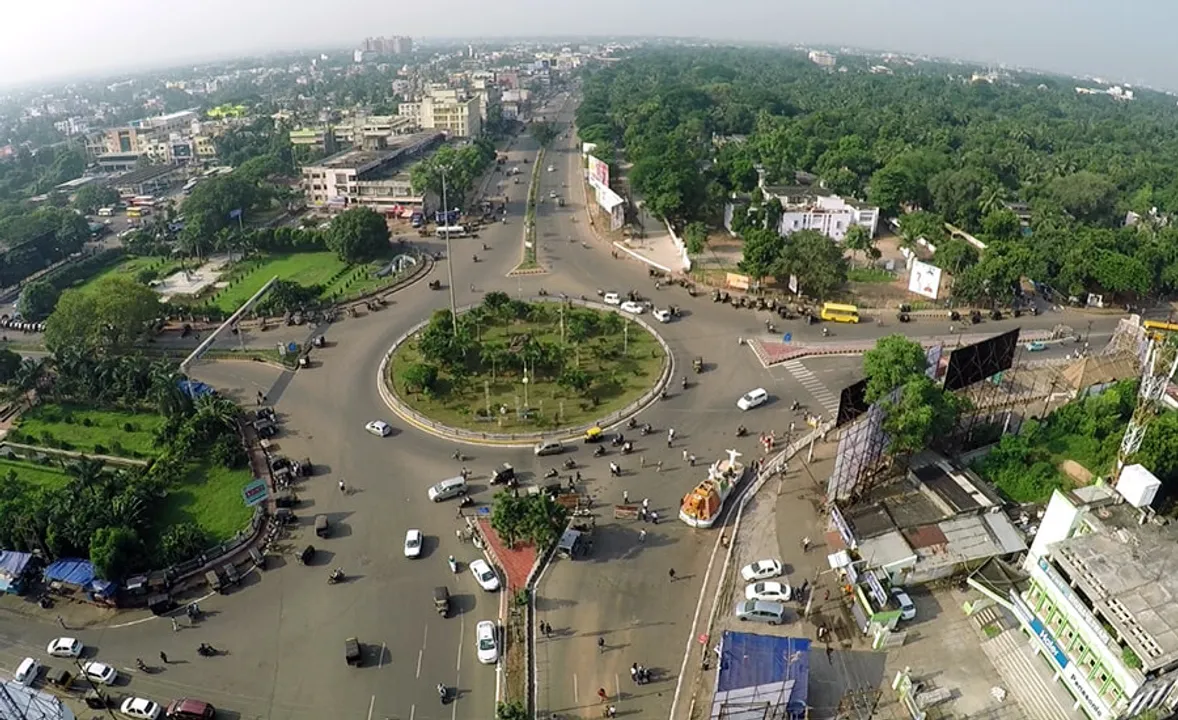
As urbanisation shapes Odisha, it has resulted in the birth of new towns, and pro-urban policies.
The data is clear: number of people living in urban areas in Odisha has risen dramatically over the last few decades. This picture has emerged thanks to a global definition of urban and rural areas recommended by the United Nations. The continued population growth within cities, connected with migration flows from suburban and rural areas, from within and across states have been contributing to the increase of people turning into towns bigger cities like Bhubaneswar.
However, in the context of building resilience, understanding climate change impacts is crucial. Even though Bhubaneswar is Independent India’s first planned capital city, yet a hour of good rainfall can maroon many in the city. For example, people living in low elevated levels are exposed to more frequent floods, and rise in river water level. It means the city needs robust spatial data to understand disaster risk better by supporting early warning systems using innovative urban planning.
Bhubaneswar has long been considered to be the megacity of Odisha, but its growth rate has significantly decreased, reflecting the demographic slowdown of the state. Yet, in terms of population growth in numbers, its built-up surface growth is projected to outpace that of other megacities in India by 2036. It resulted in efforts towards sustainable urbanisation being made to address the challenges of infrastructure development and housing while achieving many of the human settlements sustainable goals.
Bhubaneswar, too, plays an important role supporting the United Nations’ 2030 Agenda for Sustainable Development, especially SDG 11 — Sustainable Cities and Communities.