Millets have always been part of an eco-cultural system. It is not only limited to production and consumption, but envelopes a relationship with earth and her capability to sustain life and to nurture cultures that celebrate a symbiotic relationship with all life forms around them. This includes the crops on the field, the trees in the forest, the flora and the fauna which forms a part of an integral eco-socio cultural universe that sustains life and meaning.
Adi Kumruka, a Kondh farmer of Kandhaguda in Southern Odisha grows varieties of millets, sorghum, maize, pulses, beans, oil seeds, spices, roots and tubers and many others on his 1.5 acre land in the middle of a region which is being ravaged by mono-cultural eucalyptus plantations, Bt Cotton and external input-intensive agriculture.
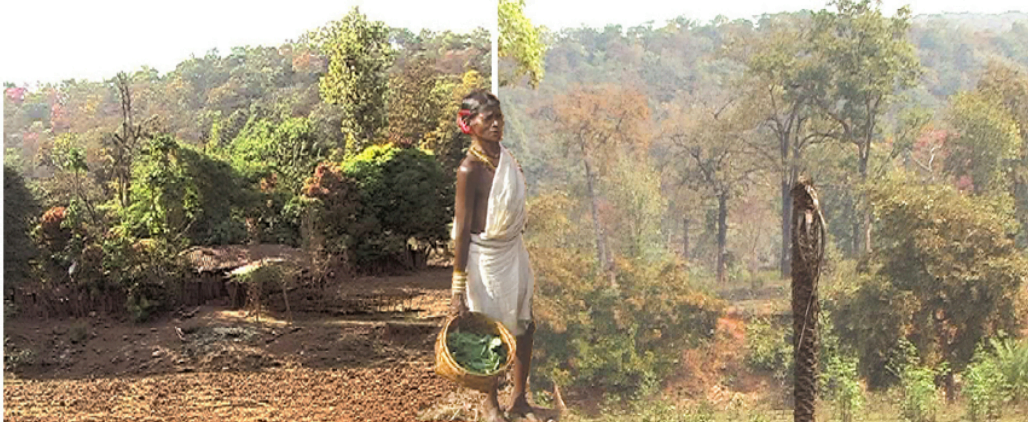
He tells us, “Whatever I obtain from my field is more than sufficient. It feeds my family, our community; it feeds the birds, the insects and the animals who visit my field. Everyone is full and happy!”
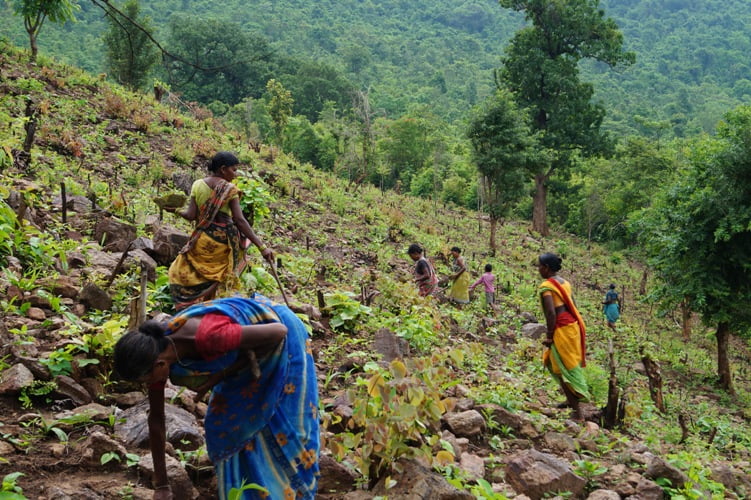
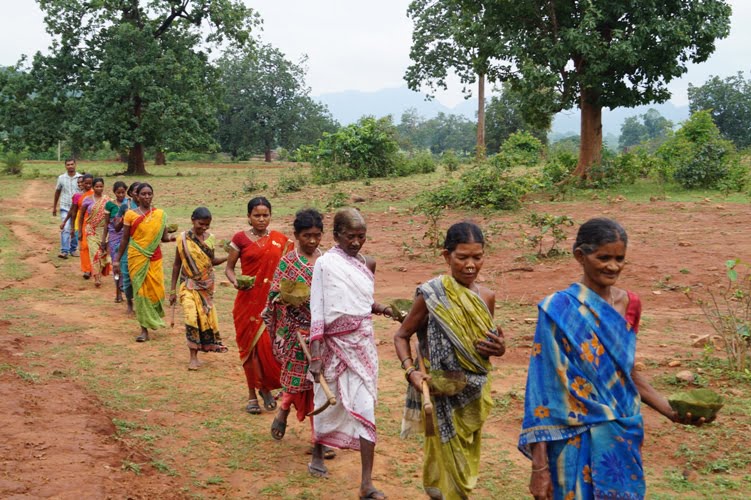
Landi Sikoka, an elderly wise woman from Khalpadar village provides further insight into the Kondh way of agri~culture. She says, “… land is allotted according to the size of the family; if one has a bigger family to feed, they get a larger piece of land. Access to land for everyone is ensured. When the season of sowing and harvesting comes, people accompany each other to their fields.” She further stated, “April is an important month for the Kondh adivasis or the Kui people, as they like to call themselves. This is the month of the Bihan Parab, a festival that is celebrated to assure the Mother Earth that the people are taking good care of the seeds, which she provided to them.
All the households have carefully collected seeds over the last season but there are some whose store of seeds has been eaten by insects and moths. No cause for worry though! The seeds from all the households will be collected and kept in the center of the village and then distributed equally to all the families to sow. It does not matter if you were unable to save your seeds because in our society, there is seed for everyone. We collectively sow and harvest our land. Our kids accompany us to the fields and from us, they learn about our agricultural practices”.
In 1960s, when the Green Revolution hit the Indian agricultural scene, the land under millets cultivation dropped drastically as all the policy benefits went to rice and wheat cultivators. Hybrid & high yielding seeds, chemical inputs in the form of pesticides and fertilisers were promoted. Millets were called coarse grains only to be consumed by the “poor”. Ironically, the same millet is now being touted as ‘health food’ or the ‘silver bullet’ to tackle the impact of climate change on food security.
Historically, millets have been grown in poly-cropping systems using agro-ecological methods. In communities like the Kondhs’, millets is not merely a grain to be consumed, rather it is the repository of generations of community’s wisdom of collective sowing and harvest. It holds the tradition of all the festivals which celebrates the underlying values of caring and sharing of their agri~culture. Their worship of mountains, the lands, the skies, the forests and their agricultural practices reflects the respect and gratitude they hold for the Dharani Penu – Mother Earth. For them, millets stand for a diverse vibrant agri~culture which sustains and keeps their internal solidarity.
The Kondh philosophy is also reflected in the presence of a common village fund either in the form of food grains or in the form of cash which can be used to meet the situation in question. This highlights the way of life of the Kondh society which revolves around the ethos of sharing ones concern with others and caring for others well-being.
The journey from coarse grains to health food
In glaring contrast to the worldview of this community which holds an immense ecological agriculture wisdom, exists the current agricultural paradigm which has successfully replaced the culture in the word “agriculture” with business, turning it into “agri~business”. One of the ways in which the agri-business model is taking shape around millets is through the promotion of millet supply from rural to urban areas.
This supply is a result of a high demand of the post-Green Revolution middle-class consumers who are plagued with non-communicable diseases like diabetes, cardiovascular diseases and obesity today. They have now sought solace in the existence of millets as a “health food”. But unfortunately, there is a promotion of only those varieties of millets which have a high demand in market. This has an inherent risk of shrinking millets diversity, weakening farm resilience and contributing to vulnerability of millets farmers especially in the context of climate change.

There is a rising worry in the Kondh community that their way of life is now severely threatened. Millet cultivation is a part of their identity as a Kondh society. The sowing, harvesting and seed sharing festivals involving millets, are also the occasions for the people to meet, sing, dance and celebrate their ecology and their oneness. This oneness has also been their strength in resisting existential threats to their way of life in the form of forest felling, forced displacement, migration of the youth and many other ways. If their agriculture withers away, it may result in distancing them from each other and their customary forms of support and their children may not be able to learn their knowledge and skills on food production, collection, and sharing with each other.
Questions waiting to be asked
Making millet a focus of consumptionist culture only reiterates the illogicality of reductionist thinking with little or no respect for cultural integrity and its life sustaining features.
The atomized consumption of millets steers away from a more important discussion – Do this change from the consumption of polished rice, wheat and maize to millets hold the potential to address the consequences that have entailed the transition from agri-culture to agri-business? Does this address the farmers’ loss of control over knowledge, seeds and land?
For anyone to assume that the mere consumption of millets will ensure their well-being is highly flawed. Our high ecological footprint reflects on highly unequal resource distribution. More importantly, it shows how our lives are threatening our farmers’ survival, because of the power structures and institutions that are constantly reproducing socio-economic inequalities. The need of the hour is to interrogate our choices and to revive the culture of an agri~culture that is rooted in the societal well-being.
Way forward
When we asked the older women of Khalpadar if they would ever let anyone cultivate a whopping 20 acres of land in their village, they laughed while dismissing our concerns, saying that, “they had no reason to object it. If the person has the energy, he or she can cultivate it. And in any case, we know that in the end we all will eat the food together.”
Behind this culture of eating and celebrating seed distribution together laid a deep sense of equity. This ensures that no one goes hungry in the community – a rather radical idea in this age of widening inequality and individualism. The underlying belief behind the idea is that ‘well-being of one living being is deeply linked with wellbeing of others’. That is why they are concerned about the birds, the insects, the ecology and every person in their society. A millet revival disconnected with the concern of societal well-being will not mean anything, if we fail to address our consumptive, individualized way of life that endangers other living beings on this planet. If this continues to go on, we will be dismally failing to be honest to our farmers and our ecology- the spirit of whom we have already managed to damage.
We express our deep gratitude toindigenous communities like the Kondhs who have refused to bow before the God of pseudo modernity and have always celebrated the multifaceted bounty of the earth that respects the tiny ants that crisscross their fields as much as they do to humans who enjoy the bounty.
–
(Kavya Chowdhry, co-author)
ADVERTISEMENT