The ubiquitous ‘Dal Makhani’ is an Indian concocted recipe of the last century that has given birth to a many Indian restaurant cuisines – ‘Moti Mahal’, ‘Dal Bhukhara’, et al.
I am an Odia and Odias thus think of dal as being vaguely yellow in colour. Back home we never had ‘dal’ which was black in colour. Neither any restaurant served this in the sixties nor did early seventies serve any dish that resembles the black ‘dal’, so ubiquitous in restaurant menus nowadays.
The key to Dal Makhani is the lentil, the humble ‘urad’, (black gram in English and ‘masha’ in Sanskrit). Of the 60 ‘dals’ that are commonly used, ‘urad’ is among the most ubiquitous found in almost every part of the country. One basic distinction is between the whole and broken-up ‘urad’ and it is the broken-up ‘urad’ which is used for the ‘dal’. When the Peshawaris came over after the partition, they bought this ‘dal’ with them as most of them became restaurateurs; this was the ‘dal’ they put on their menus.
Even if we dispute the distinction between the two kinds of urad, what is clear is that the pre-partition Punjabis did not put tomatoes in their ‘dal’. If they needed a souring agent, they used yogurt. Tomato puree is now regarded as an essential ingredient of black ‘dal’.
Our story now veers to Delhi’s Darya Ganj ‘Moti Mahal’ owned by Kundan Lal Gujral. It seems Kundan Lal was worried about the cooked chicken drying out. He searched for a sauce that led to the creation of the butter chicken, made from bits of tandoori chicken that were in danger of drying out. Kundan Lal then searched for a vegetarian option, and all he did was to take the black dal of his ancestors and to add his makhani sauce to it. After butter chicken, came his ‘butter dal’. The outcome plainly speaking is ‘Dal Makhani’ invented by Kundan Lal Gujral of ‘Moti Mahal’.
‘Dal Makhani’ is now a menu standard. The ‘dal’ which has found international fame is ITC’s own ‘Dal Bhukhara’. Tourists flock to ITC’s ‘Bhukhara’ (which is now celebrating its 35 plus years of inception) but also has made a fortune from its packaged ‘Dal Bhukhara’ which is sold all over the world.
Is there a difference between ‘Dal Makhani’ and ‘Dal Bhukhara’?
The answer is yes.
Moti Mahal’s recipe is a mixture of dals: 50 per cent urad and the rest 50 per cent is divided between ‘rajma’ and ‘channa’ dal. The ‘Bhukhara dal’ is all ‘urad’. The use of other dals gives the viscosity – resulting in a thicker dal and rajma adds a little colour. The Bukhara dal gets its viscosity from slow cooking – something most restaurants don’t bother. The dal is cooked over low flame overnight and never taken off the fire. Once the KOT is in it is simply ladled out of the master pot. In other restaurants dal makhani is cooked once a day and then taken off the fire. When you order it, they heat it up again and add cream and various other kinds of dairy fat and flavouring to tart it up before service. This is why black dal in other restaurants is often served much hotter than the Bukhara version.
There are other differences as well. Because Moti Mahal was a way for refugees to stand on their own feet after Partition, all its dishes emerged out of improvisation. Bukhara, on the other hand, is India’s most expensive restaurant (for Indian food at least) and so, has an obsession with the quality of the lentils, sourcing them from the best farmers and then worrying incessantly about the water it uses. Any chef will tell you that water is the key to a good dal. But water varies from city to city and frequently, urban water is either over-chlorinated or, if you use your own filters, can taste slightly odd. ITC uses mineral water to standardise the taste of its Dal Bukhara at all its hotels.
When ITC first started selling the packaged dal, they were surprised by the negative feedback. ITC chefs tried the canned dal and discovered that it really wasn’t very good. They could not understand this. They had made the dal to the traditional recipe. It took some research to work out that the dal had reacted with the metal of the can and its taste had changed. So, now ITC refuses to can the dal and now sells it in sachets which preserve the taste far better. (Though of course, you can buy canned black dal from a variety of other companies.)
I am a die-hard black dal fan; rest assured that my interest in the invention of this dish is purely academic. I do like local restaurants serving of black dal and each time I eat I feel like having a showdown with the chefs. If we are out for dinner my family members know my choice and in some restaurants the captain coyly says that the black dal is over even though it is served on the neighbours table: the reason you can guess.
My own view is that the chefs of the Fifties and Sixties (people like Kundan Lal) did for Indian restaurants what the likes of Escoffier did for French cuisine. They created dishes, they invented sauces that became kitchen standards (the makhani sauce, for instance) and they established the basic north Indian menu which remained largely unchanged for the rest of the 20th century. The great Indian chefs of the Fifties and Sixties pursued a goal that no longer seems very interesting to us: they wanted food that tasted ‘shahi’ or rich.
The basis of any ‘shahi’ dish is essentially animal fat. Take away tandoori meat and much of mid-20th century Indian cuisine was about fat. Chefs cooked in lots of oil, they suffused their curries with animal fat and they loved dairy fat. When they made vegetarian dishes, they compensated for the lack of meat fat by adding cow fat in the form of butter, ghee and cream. That’s why dal makhani is full of cream and butter. (Kundan Lal’s recipe has one kg of dal, 500 ml of cream and a full kg of butter! Dal Bukhara is also something of a dairy product). Dal bhukhara has only six percent of cream and butter of the portion served.
I like to think that Indian chefs are now going back to their roots, to the traditional dishes of Indian cooking and to the food of our grandmothers who had no interest in feeding us ‘shahi’ meals. There is a greater emphasis on spicing (dal makhani and Dal Bukhara have hardly any spices) and a conscious effort to lighten the cuisine.
All cuisines need to evolve. But as this evolution continues, we can still celebrate the dishes that have come to epitomise a certain kind of Indian restaurant cooking all over the world. And black dal, whether in its Moti Mahal avatar or in its currently fashionable Bukhara version, is one of the classics of 20th century Indian restaurant cuisine.
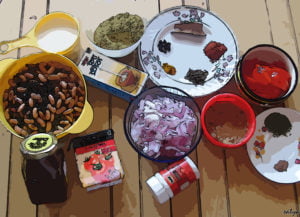
Original Moti Mahal Dal Makhani Recipe:
Ingredients
500 g black gram (urad whole)
250 g kidney beans (rajma)
250 g Bengal gram (channa dal)
1 litre milk
1 litre tomato puree
Salt to taste
25 g red chilli powder
25 g cumin (jeera) powder
500 g cream
1 kg butter
How To Cook
Pick and clean the dals and rajma. Add salt and rub gently with both hands; rinse with water. Soak the mixture overnight in water. Take a utensil with a heavy base, add the drained dal mixture and double the quantity of water; cook over low heat. At the restaurant, it is put in a tandoor for a while to simmer slowly. Stir the mixture vigorously enough to mash it.
Once the mixture thickens add milk and cook till the milk is completely absorbed. Add the tomato puree and all spices; cook (for about 30 minutes) till grams and beans are tender. Add butter and cook for 10 minutes.
Now add cream and stir for one-two minutes. Remove and serve hot.